5 SEO Metrics for Content Marketing Success
Content marketing without measurement is just guesswork dressed up as strategy. The right SEO metrics for content marketing show which pages bring in traffic, which topics turn into leads, and which pieces need a rewrite before they get buried on page two of Google. Business owners and marketing teams often publish blog after blog without checking if any of it moves the needle, and months later they wonder why growth has stalled. This article breaks down the metrics that actually show whether content is working, how to read them together instead of in isolation, and what Crescita Solutions does differently when tracking client results.
What Are the Best Metrics for Content Marketing?
Good content marketing metrics fall into a few categories: visibility, engagement, conversion, and authority. Each one tells a different part of the story, and looking at only one gives an incomplete picture.
The metrics worth tracking most closely include:
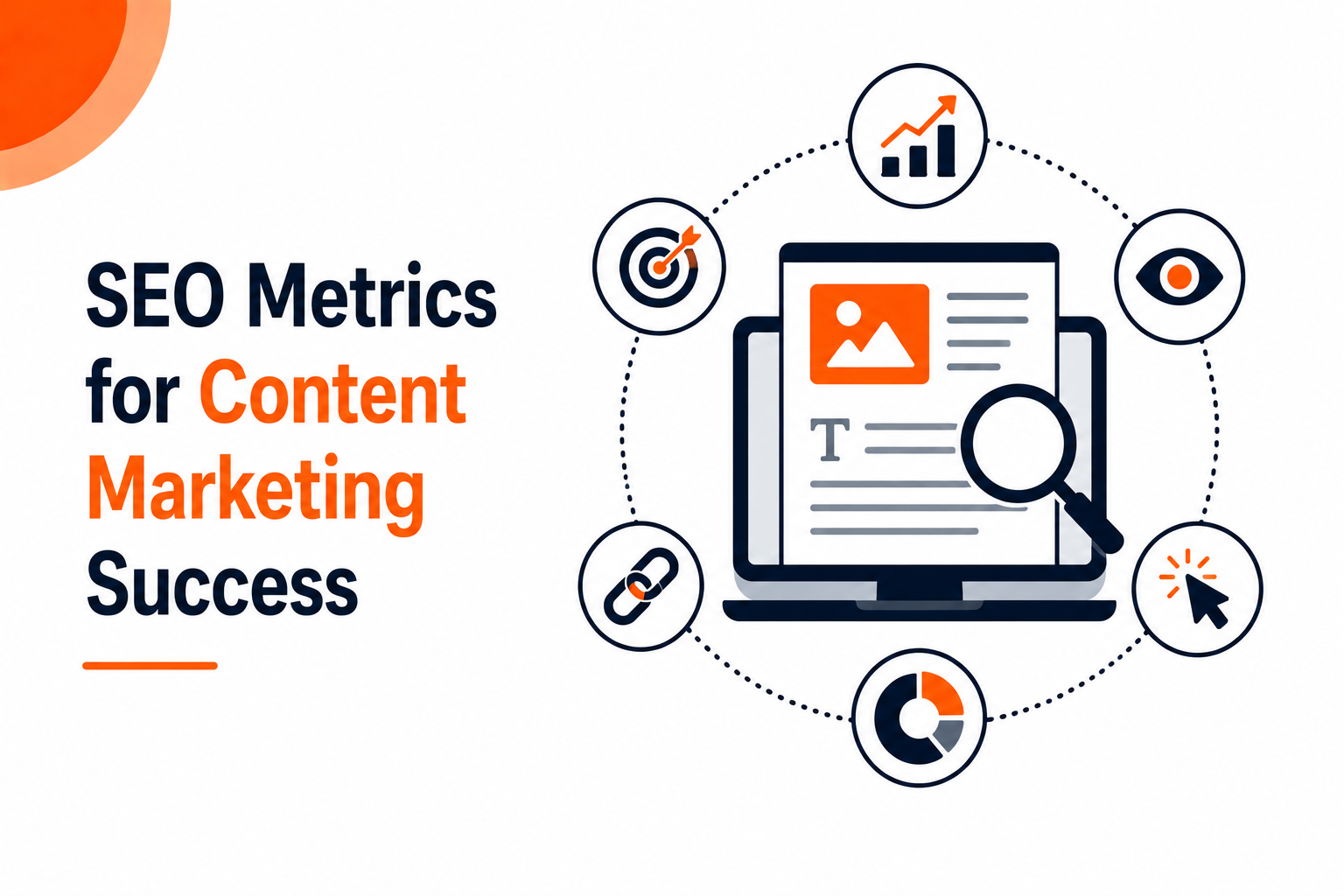
- Organic traffic: The number of visitors arriving from search engines, broken down by page and by source.
- Keyword rankings: Where target terms sit in search results, tracked over weeks and months rather than days.
- Click through rate (CTR): The percentage of people who click a result after seeing it in search, which reflects how well a title and meta description perform.
- Bounce rate and time on page: Signals of how engaging the content actually is once a visitor lands on it.
- Backlinks: Other sites linking back to a page, a signal search engines use to judge authority and trust.
None of these numbers mean much on their own. A page with high traffic but a short average visit time might rank well but fail to hold attention, while a page with fewer visitors but longer engagement could be converting better behind the scenes.
What Metrics Indicate Content Marketing Success?
Success looks different depending on the goal behind each piece of content. A blog post meant to build brand awareness gets judged differently than a landing page built to generate leads.
Metrics that point toward success include:
- Conversion rate: The share of visitors who complete a desired action, such as filling out a form or making a purchase.
- Lead quality: Not just the number of leads generated, but if those leads turn into paying customers.
- Return visits: Readers coming back for more content signal trust and interest building over time.
- Social shares and mentions: A sign that content resonates enough for people to pass it along.
- Search visibility growth: An increase in the number of keywords a site ranks for, showing that content is expanding its reach across topics.
Owners should set clear goals for each content type before publishing. A guide meant to educate first time buyers should be judged on time on page and scroll depth, while a product comparison page should be judged mainly on conversions.
Aligning Content Analytics with Marketing Metrics
Content analytics only become useful once they connect to broader business goals. A spike in blog traffic means little if it never turns into a sale, a signup, or a phone call, so tying analytics platforms together gives a clearer path from click to customer.
Steps that help align the two:
- Connect Google Analytics with a CRM so that every lead can be traced back to the content that brought them in.
- Set up goal tracking for form submissions, downloads, and other actions that count as conversions.
- Use UTM parameters on shared links to track which channels drive the highest quality traffic.
- Review sales data alongside content performance monthly, comparing which topics and formats bring in customers who stay.
Marketing teams that skip this step often celebrate traffic growth that never shows up in revenue. Connecting the dots between a blog post and an actual sale takes more setup, but it turns vague performance reports into decisions the whole business can act on.

Which Metrics Define a Content Marketing ROI?
Return on investment for content marketing comes down to comparing what gets spent against what gets earned, but the calculation needs the right inputs to mean anything.
Metrics that feed into a clear ROI figure include:
- Cost per piece of content: Covering research, writing, editing, and design.
- Traffic value: What the same traffic would cost through paid ads, giving organic content a comparable dollar figure.
- Conversion rate and average order value: Multiplied together to show revenue generated per visitor.
- Customer lifetime value: Especially important for content that brings in repeat buyers or long term clients.
- Time to payoff: How many months it takes for a piece of content to earn back its production cost.
Content marketing ROI often takes longer to show up than paid advertising, since organic rankings build gradually. A blog post might take three to six months to reach its full traffic potential, so short term reports can undersell the eventual payoff.
Most Important SEO Metrics for Content Marketing
Some metrics are more significant than others when judging if an SEO and content strategy is working as a whole.
The metrics that deserve the closest attention are:
- Organic traffic trends over a period of several months, not single week snapshots.
- Keyword ranking movement for terms directly tied to products or services.
- Domain authority growth, reflecting the overall trust search engines place in a site.
- Conversion rate by content type, showing which formats actually drive business results.
- Page load speed and core web vitals, since technical performance affects both rankings and user experience.
These five areas give a full picture when reviewed together, showing not just how much traffic content brings in, but if that traffic turns into something the business can measure in dollars.
Crescita Solutions: Turning Content Metrics Into Growth
Crescita Solutions builds every content strategy around measurable outcomes from the start. Instead of publishing content and hoping it performs, the team sets clear KPIs for each piece, tracks performance monthly, and adjusts topics and formats based on what the data shows.
Clients working with Crescita get:
- Custom dashboards showing traffic, rankings, and conversions in one place.
- Monthly performance reviews that connect content output directly to business results.
- Content audits that flag underperforming pages and recommend specific fixes.
- ROI tracking tailored to each client’s goals, covering leads, sales, or brand visibility.
Businesses that partner with Crescita Solutions get more than blog posts and keyword lists. They get a team that treats every piece of content as an investment worth measuring, refining, and improving until it delivers results that show up on the balance sheet.