What is Content Marketing and Why is it Important?
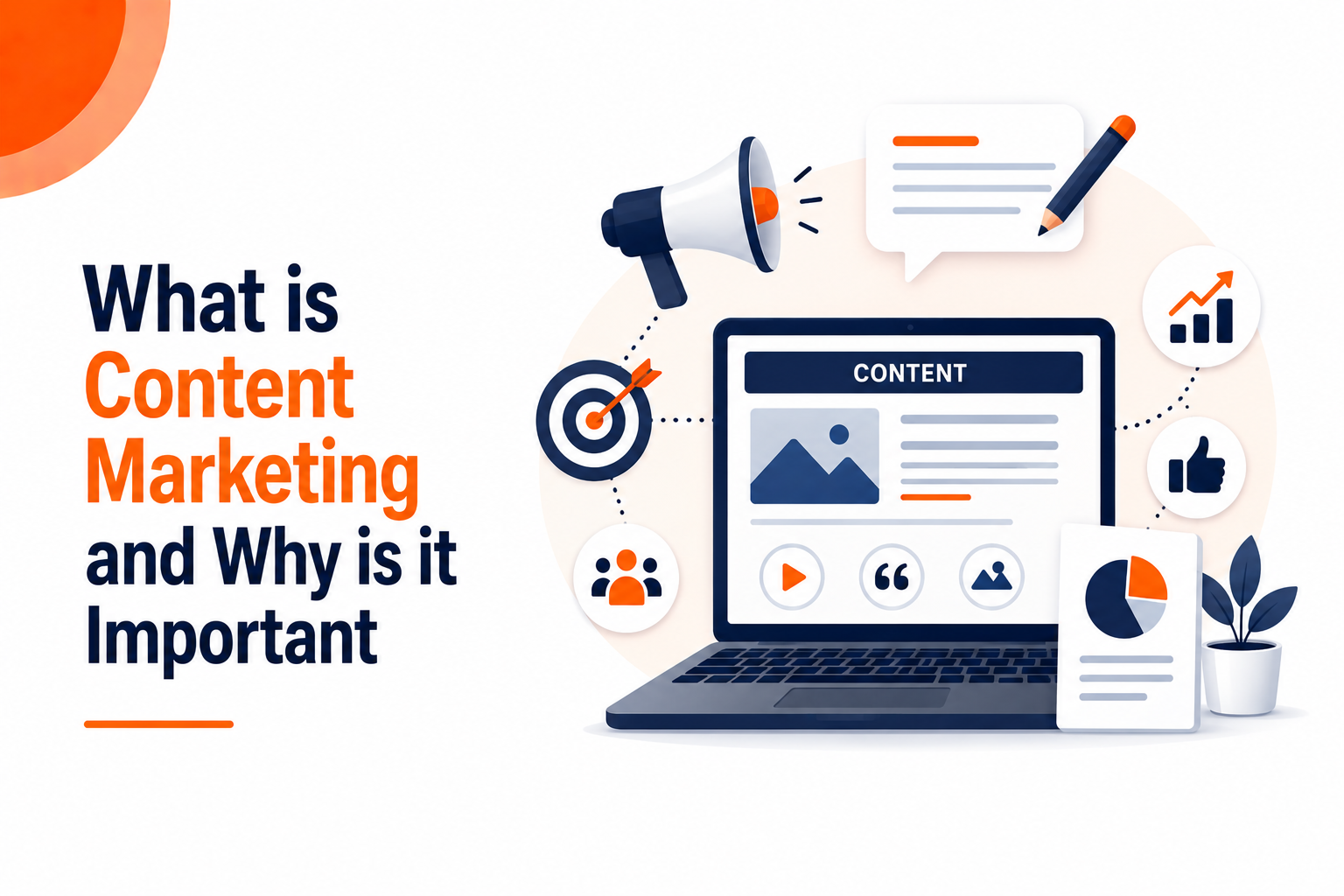
What is content marketing? At its most basic, content marketing is the practice of creating and publishing useful, relevant material such as blog posts, videos, guides, and social content, aimed at attracting and holding an audience without directly pitching a product in every piece. A brand earns attention by answering questions and solving problems, building a body of work an audience returns to on its own, in place of buying that attention through ads.
This approach costs more time up front than a single ad campaign, but the payoff compounds: a blog post published years ago can still bring in traffic and leads today, long after a paid ad has stopped running. This guide breaks down what content marketing actually involves, why it counts so much for B2B companies specifically, why it pays off for businesses of any size, and how SEO and content marketing work together to bring the right audience to the content in the first place.
Content marketing covers a wide range of formats: blog articles, case studies, email newsletters, videos, podcasts, infographics, and social posts all count, as long as the content gives the audience something useful and does not ask for a sale outright. A company selling accounting software might publish guides on tax preparation. A company selling hiking gear might publish trail guides and gear reviews. In both cases, the content builds trust with an audience long before that audience becomes a customer.
Why Content Marketing Is Important for B2B
B2B purchases usually involve long research periods, multiple decision makers, and high stakes, since a bad vendor choice can cost a company money and time. Content marketing gives B2B buyers the information they need to move through that research process, and it puts the publishing company in front of them at every stage.
A buyer evaluating new software might read a comparison guide, download a whitepaper, watch a product demo video, and read a handful of case studies before ever speaking with a sales rep. Every one of those touch points is content marketing, and a company without a solid library of this material simply loses visibility to competitors who published first.
Content marketing also builds authority in a B2B space where trust drives the sale more than price alone. A company publishing detailed, accurate content on industry problems positions itself as a knowledgeable partner and not just another vendor competing on cost. This authority shortens sales cycles because buyers arrive at a sales call already informed and already confident in the company’s expertise.
Why Is Content Marketing Important for Your Business?
Beyond B2B specifically, content marketing pays off for nearly any business with an online presence, for a few concrete reasons.
- It builds organic search traffic. Blog posts, guides, and resource pages rank in search engines and bring in visitors without an ongoing ad budget attached to each click.
- It builds trust before the first sale. Customers research before buying, and useful content answers their questions before they ever speak with a sales team.
- It supports every other marketing channel. Social posts, email campaigns, and paid ads all perform better with a library of content behind them to link back to and repurpose from.
- It creates a lasting asset. A well written guide keeps generating traffic and leads for years, unlike an ad campaign that stops the moment the budget runs out.
- It differentiates a brand from competitors. Two companies selling similar products can look identical on price and features, but the one publishing truly useful content stands out as the more credible option.
Businesses that skip content marketing tend to rely entirely on paid channels, which work only as long as the budget keeps flowing. A business with a content library keeps earning traffic and leads even during months when ad spend gets cut.

Why Is SEO Important in Content Marketing?
Content marketing without SEO is a bit like opening a store with no sign and no address listed anywhere. The content might be excellent, but if search engines cannot find and rank it, almost nobody will.
SEO gives content marketing its distribution engine. Search term research shows what an audience actually looks for, so content answers questions in place of topics nobody looks up. On page SEO, including page titles, headings, and internal links, helps search engines understand what a page covers and match it to the right search. Technical SEO, covering site speed and mobile usability, makes sure a well written page actually loads and performs once a visitor clicks through.
Without SEO, a brand can publish outstanding content that only a handful of people ever see, since social shares and direct visits alone rarely produce the volume of traffic that organic search can. With SEO built into a content strategy from the start, one well ranked page can bring in steady traffic for years, turning a single piece of content into a long term source of leads and not a one time post that disappears after a week.
Crescita Solutions: Best Content Marketing Agency
Crescita Solutions builds content marketing programs that pair useful, well researched content with the SEO work needed to get that content found. Our team handles search term research, content planning, writing, and on page optimization together, so every piece of content publishes with a chance at ranking and not sitting unseen on a blog nobody visits.
For B2B clients, Crescita builds content aimed at every stage of a long sales cycle, from early research content through comparison guides and case studies that support a live sales conversation. For businesses of any size, our team builds a content library designed to keep generating traffic and leads long after publication, backed by technical SEO work that makes sure the content actually performs once it goes live.
Content marketing works best as a long term investment and not a short campaign, and pairing it with SEO from day one is what turns a blog into an asset a business can rely on for years. A company that treats content and search as one connected strategy, not two separate tasks, tends to see far better results than one that treats them as unrelated line items on a budget.