Inbound Marketing vs Content Marketing: Which Do You Need?
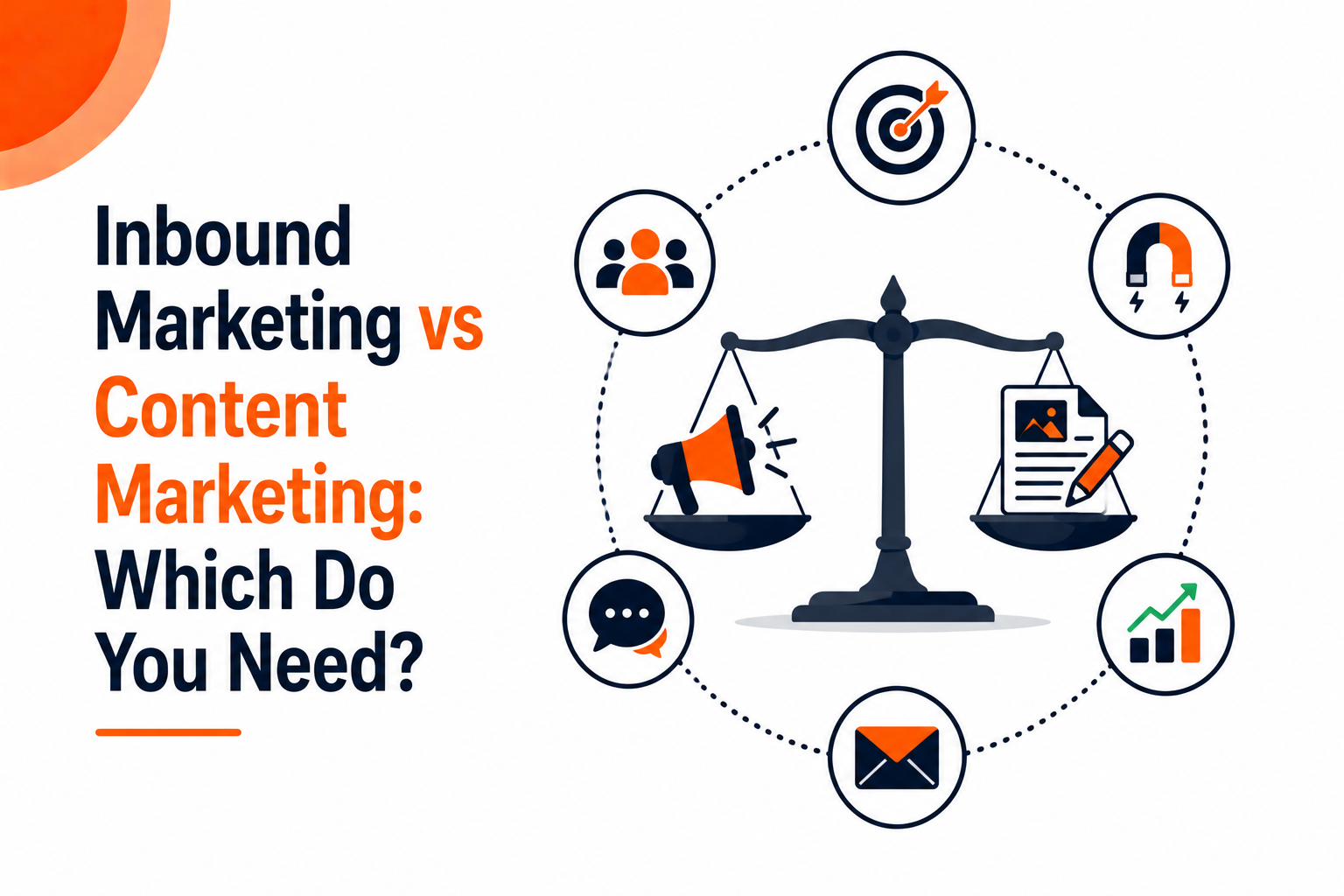
Business owners often use inbound marketing and content marketing as if they mean the same thing, but understanding inbound marketing vs content marketing shows they are not identical, and knowing the difference changes how a business should plan its budget and strategy. Content marketing is one tool inside a larger inbound marketing approach, not a replacement for it.
Inbound marketing covers the full system that attracts, converts, and retains customers, using email, social media, SEO, and paid channels alongside content, while content marketing focuses specifically on the blog posts, videos, guides, and other material that fuels those channels. This article breaks down what quality content looks like inside an inbound approach, how to build a content strategy that supports inbound goals, where content fits into inbound sales, best practices for building a content strategy, SEO practices that support the whole system, and how Crescita Solutions builds both into one working plan.
What Is Quality Content in Inbound Marketing?
Inbound marketing works by pulling potential customers toward a business instead of pushing ads at them, and the content used inside that system needs to capture interest without interrupting it.
Quality content in an inbound context usually includes:
- Answers real questions: Content built around what a target customer actually types into a search bar, not just topics a business wants to talk about.
- Provides depth: Thin, surface level posts rarely satisfy a reader’s actual question, while detailed guides tend to hold attention and rank better in search results.
- Matches buyer intent: Content written for someone just starting to research a problem looks different from content aimed at someone ready to compare vendors.
- Builds trust over time: Consistent, accurate content across a site signals expertise, which counts for more as competition for attention grows in every industry.
- Connects to a clear next step: Good inbound content guides a reader toward a natural action, such as signing up for a newsletter or booking a call, without feeling forced.
Content that checks these boxes tends to perform two jobs at once: it ranks well in search and it moves readers further along the path toward becoming a customer.
Content Strategy for Inbound Marketing
A content strategy built for inbound marketing needs to connect individual pieces of content to the broader system that turns visitors into leads and leads into customers.
Building this kind of strategy involves:
- Mapping content to the buyer journey: Awareness stage content answers broad questions, consideration stage content compares options, and decision stage content addresses specific objections.
- Aligning topics with SEO research: Every piece of content should target keywords with real search volume, so the content actually gets found by the people it was written for.
- Planning content around lead capture: Blog posts and guides should link to relevant offers, such as templates, checklists, or consultations, that give visitors a reason to share their contact information.
- Coordinating content across channels: A single piece of content often gets repurposed into an email, a few social posts, and a video, extending its reach beyond the blog itself.
- Reviewing performance regularly: Traffic and ranking numbers show what topics resonate, giving direction for what to create next.
A content strategy without this kind of structure tends to produce a pile of blog posts that never connect to actual leads or sales.

The Role of Content Marketing in Inbound Sales
Content marketing supports the sales process long before a prospect ever talks to a salesperson, shaping how much they already know and trust a business by the time that conversation happens.
Content plays several roles inside inbound sales:
- Answers objections early: Detailed comparison pages and FAQ content handle common concerns before a prospect raises them directly to a sales rep.
- Builds trust through case studies: Real examples of past results give prospects proof that a product or service delivers on its promises.
- Shortens the sales conversation: Prospects who already read relevant content arrive at a sales call better informed, cutting down on basic questions and speeding up the decision.
- Supports lead nurturing: Email sequences built around helpful content keep a business visible to prospects who are not ready to buy immediately.
- Provides sales teams with material: Blog posts, guides, and case studies give sales reps something concrete to share when a prospect needs more information mid conversation.
Sales and content teams that work closely together tend to close deals faster, since the content answers questions before a rep ever needs to.
Best Practices for Creating a Content Marketing Strategy
Building a content marketing strategy that actually supports business goals takes more than picking topics and publishing on a schedule.
Practices worth following include:
- Start with clear goals: Decide if a piece of content aims to build awareness, generate leads, or support existing customers before writing begins.
- Research topics based on real search data: Use keyword tools to confirm that a topic has actual search volume before investing time in a full piece.
- Create a realistic publishing schedule: Consistency counts for more than volume, so a sustainable schedule beats a burst of content that stops after a few weeks.
- Update older content regularly: Refreshing outdated posts with new information often produces faster results than only publishing new pieces.
- Track results against goals: Review traffic, rankings, and conversions on a set schedule, adjusting the plan based on what the data actually shows.
A content strategy built around these practices tends to produce steady, compounding results instead of short bursts of traffic that fade quickly.
Best SEO Practices for Content Marketing
SEO and content marketing work together, and content built without SEO in mind often struggles to get found regardless of how good the writing is.
SEO practices that support content marketing include:
- Target one primary keyword per page: Trying to rank a single page for too many unrelated terms usually weakens its performance for all of them.
- Write descriptive title tags and meta descriptions: These elements affect click through rates directly, even when rankings stay the same.
- Use header tags to structure content: Clear H2 and H3 headings help both readers and search engines understand how a page is organized.
- Build internal links between related pages: Linking new content to existing pages helps distribute authority across the site and keeps readers engaged longer.
- Optimize for page speed and mobile use: Slow or hard to use pages on mobile devices lose visitors and can affect rankings directly.
- Earn backlinks through original research or data: Content that offers something unique, like original survey data, tends to attract links naturally over time.
Following these practices consistently gives content a much better chance of ranking, which is the first step before any of the other inbound benefits can happen.
Crescita Solutions: Inbound Marketing and Content Strategy Built Together
Crescita Solutions builds content marketing as part of a full inbound strategy, not as a standalone blog that operates separately from the rest of a business’s marketing efforts.
Clients working with Crescita Solutions get:
- A content strategy mapped to the buyer journey, connecting topics directly to lead generation goals.
- SEO integration so every piece of content targets real search demand from day one.
- Lead capture planning built into content, turning readers into contacts instead of one time visitors.
- Cross channel coordination, extending content into email and social instead of leaving it isolated on the blog.
- Ongoing performance tracking that connects content directly to leads and revenue, not just traffic.
Businesses that work with Crescita Solutions get content and inbound strategy treated as one connected system, built to move visitors from a first search all the way through to becoming paying customers.