How to Build an Effective Content Marketing Funnel
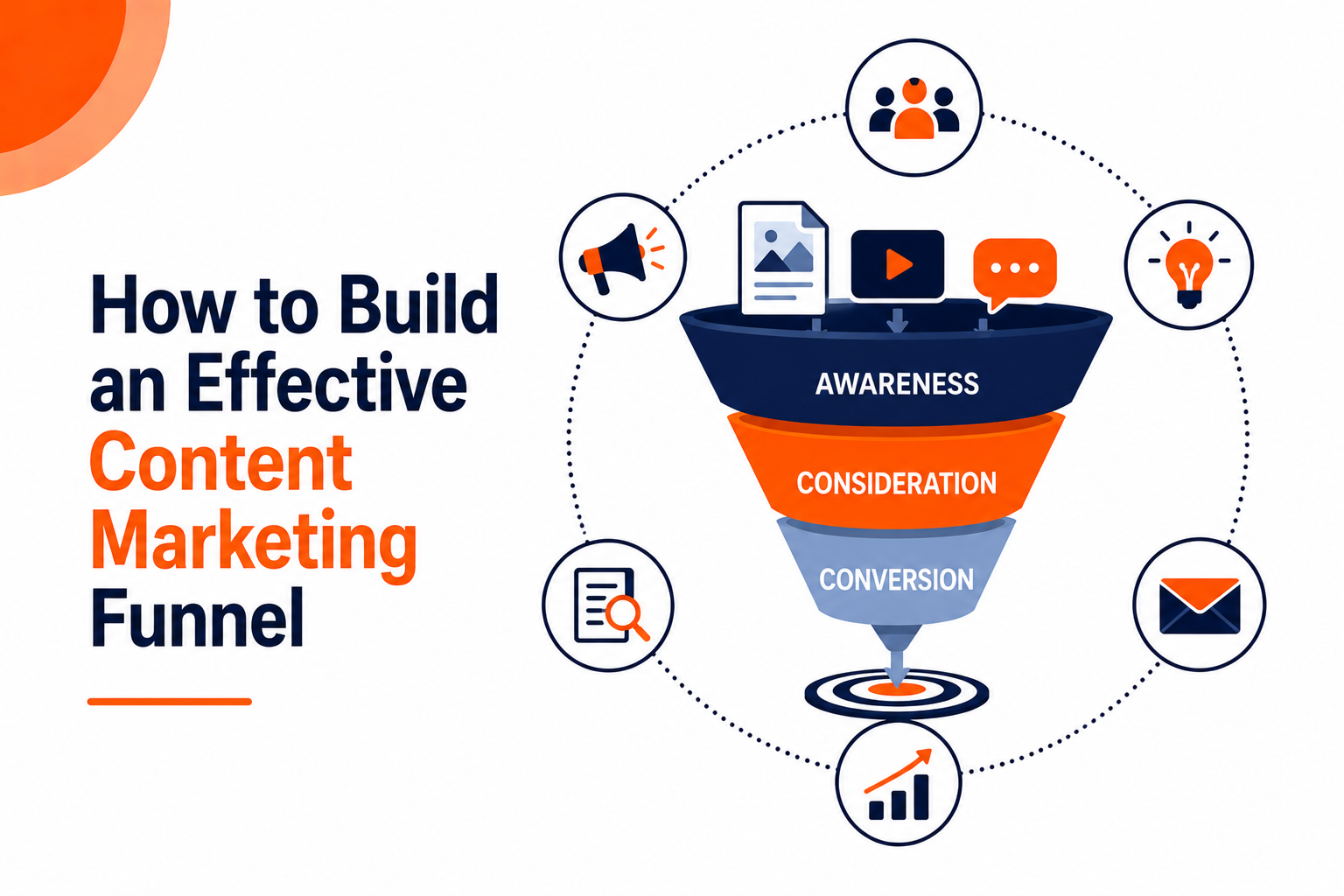
A content marketing funnel maps out the full path a reader takes on the way from a first search to becoming a paying customer. Most businesses publish blog posts, guides, and videos with no plan connecting them, so the content sits in isolation, ranks for a while, and never turns into a sale or a lead. A working content marketing funnel fixes this by giving every piece of content a job: awareness posts pull in new visitors, consideration guides move them toward a decision, and decision stage pages close the sale.
This guide covers what a funnel looks like, the stages inside it, how to audit one you already have, how to spot the gaps quietly costing you conversions, and what changes for B2B companies with longer sales cycles and multiple buyers involved.
What Is a Content Marketing Funnel?
A content marketing funnel is a structured system that guides a potential customer through distinct phases of buying intent, using content designed for each phase. A funnel replaces random topics chosen on a whim, and it forces every piece of content to answer a question: what does this reader need to know right now, and what should they do next?
Three broad phases make up the funnel:
- Top of funnel (awareness): the reader has a problem but doesn’t know your brand or possibly even the solution category.
- Middle of funnel (consideration): the reader knows the solution category and compares options.
- Bottom of funnel (decision): the reader picks a specific product, service, or vendor.
Without this structure, marketing teams end up with a pile of blog posts that get traffic but no revenue attached. A funnel gives every article, video, or lead magnet a job to do.
Stages of a Content Marketing Funnel
Each stage needs its own content format, tone, and call to action. Here is how the stages break down in practice.
Awareness stage. Readers here search broad, informational queries. Blog posts, infographics, short videos, and social content work well because they answer a question without asking for anything in return. A B2B software company targeting “how to reduce employee turnover” is speaking to this stage, not pitching its HR platform yet.
Consideration stage. Readers now know the category of solution and compare approaches. Comparison guides, webinars, case studies, and email courses fit here, showing why one method beats another with data and examples in place of opinion.
Decision stage. Readers are ready to choose a vendor. Product demos, pricing pages, testimonials, and free trials belong here. Content should remove doubt: answer objections directly, show proof of results, and make the next step obvious.
Retention and advocacy. Many funnels stop at the sale, but the most effective ones continue past it. Onboarding guides, customer newsletters, and loyalty content turn buyers into repeat customers and referral sources.
A funnel only works when content connects between stages. Awareness posts should link to consideration guides, and consideration guides should point toward a decision stage demo or trial. Broken links between stages are among the most common reasons a funnel underperforms even when pieces rank well individually.

Content Marketing Funnel Audit
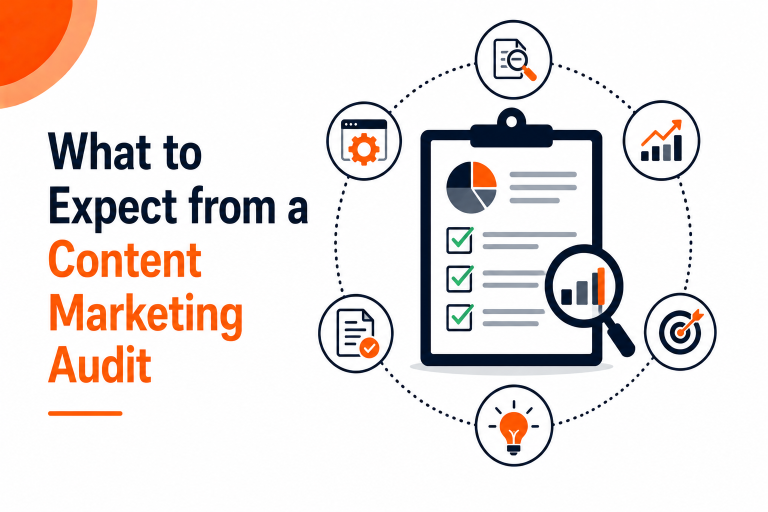
Before adding anything new, an audit tells you what content is already live and where it sits in the funnel. A basic audit includes:
- A full content inventory. Every blog post, video, guide, case study, and landing page from the last twelve to eighteen months belongs on the list.
- Stage tags on each piece. Awareness, consideration, or decision gets assigned based on intent and search term.
- Traffic and conversion data. Organic traffic, time on page, and conversion rate for each piece come from analytics.
- Internal linking checks. Awareness content should link to consideration content, and consideration content should link to decision content.
- Flags on weak pieces. Old statistics, broken links, and low rankings signal content that needs updating or removing.
Most audits reveal an uneven funnel: dozens of awareness posts, a handful of consideration pieces, and almost nothing for decision stage buyers, which explains why sales stay flat even as traffic looks healthy.
How to Identify Content Gaps in a Marketing Funnel
Content gaps show up where a stage has little or no supporting material, or where competitors answer a question your site ignores.
- Search term mapping against funnel stages. Target search terms grouped by intent (informational, comparative, transactional) show thin coverage fast.
- Competitor content review. Formats or angles your site hasn’t covered often stand out immediately.
- Sales team questions. Recurring objections from sales calls almost always point to missing decision stage content.
- Search console near misses. Pages ranking on page two or three for valuable terms often need expansion, not a rewrite.
- Drop off points in analytics. A high bounce rate on a consideration page usually means the next piece of content is missing.
Once gaps are identified, prioritize by impact. A missing comparison guide for a high intent search term often closes more deals than another top of funnel blog post, even with less traffic.
B2B Content Marketing Funnel
B2B buying cycles run longer and involve more people than most B2C purchases. A single purchase might pass through a manager, a director, a finance team, and a procurement department, each looking for different information.
A few points separate a B2B funnel from a general one:
- Longer consideration stage. B2B buyers research for weeks or months, so consideration content needs more depth: whitepapers, ROI calculators, and detailed comparison pages perform better than short blog posts.
- Multiple buyer personas. Content should address technical evaluators, budget holders, and end users separately, since each group asks different questions.
- Account based content. Larger B2B companies often build content for named target accounts in place of broad audiences, tailoring case studies to a specific industry or company size.
- Sales and marketing alignment. In B2B, marketing content frequently supports a live sales conversation, so decision stage assets need to double as material a sales rep can share directly.
- Trust signals hold more weight. Certifications, security details, and client logos often decide a B2B purchase, so this information needs a clear place in the funnel, not a buried footer link.
A B2B funnel built around these differences converts leads faster because it answers the day to day concerns of committees, not just individual buyers.
Building Your Content Marketing Funnel with Crescita Solutions
Crescita Solutions builds content marketing funnels for clients across industries and regions, pairing SEO strategy with web design so every stage sits on a site built to convert. Our team audits published content, maps gaps against search data, and produces awareness, consideration, and decision stage assets designed to move a reader toward a sale, not just a page view.
For B2B clients, Crescita builds funnels around buying committees, not individual searchers, pairing long form guides with the technical SEO and site structure needed to keep every stage connected.
A content marketing funnel only pays off when every piece of content has a defined stage, a clear next step, and a connection to the pieces around it. Once the structure is right and the gaps competitors leave open are closed, content stops being a cost center and starts driving pipeline.