How to Measure the ROI of Content Marketing
Marketing budgets get cut fast when nobody can prove what content is actually doing for the business. Learning how to measure the ROI of content marketing gives owners and marketing teams a way to show real numbers instead of vague claims about brand awareness. Without a clear method for tracking return, content spend looks like a cost center instead of an investment, and that makes it an easy target when budgets tighten.
This article covers how to calculate content marketing ROI step by step, what an ROI driven approach looks like in practice, how content compares to native advertising, what changes for B2B and SaaS companies, how to judge an agency’s performance, and how Crescita Solutions builds measurement into every content plan from day one.
How to Calculate ROI of Content Marketing
Calculating ROI starts with two numbers: what got spent and what came back. The formula looks simple on paper, but getting accurate inputs takes some work.
The basic steps look like this:
- Add up total content costs, including writing, editing, design, promotion, and any tools or software used to produce and distribute the content.
- Track the revenue that content generated, using goal tracking in Google Analytics or a CRM to connect specific pages to sales or leads.
- Subtract cost from revenue, then divide that number by the original cost to get a percentage return.
- Adjust for time, since content built for long term organic growth may not show its full value in the first month or quarter.
- Factor in indirect value, such as brand searches, email signups, and repeat visits that don’t show up as an immediate sale but still support the sales funnel.
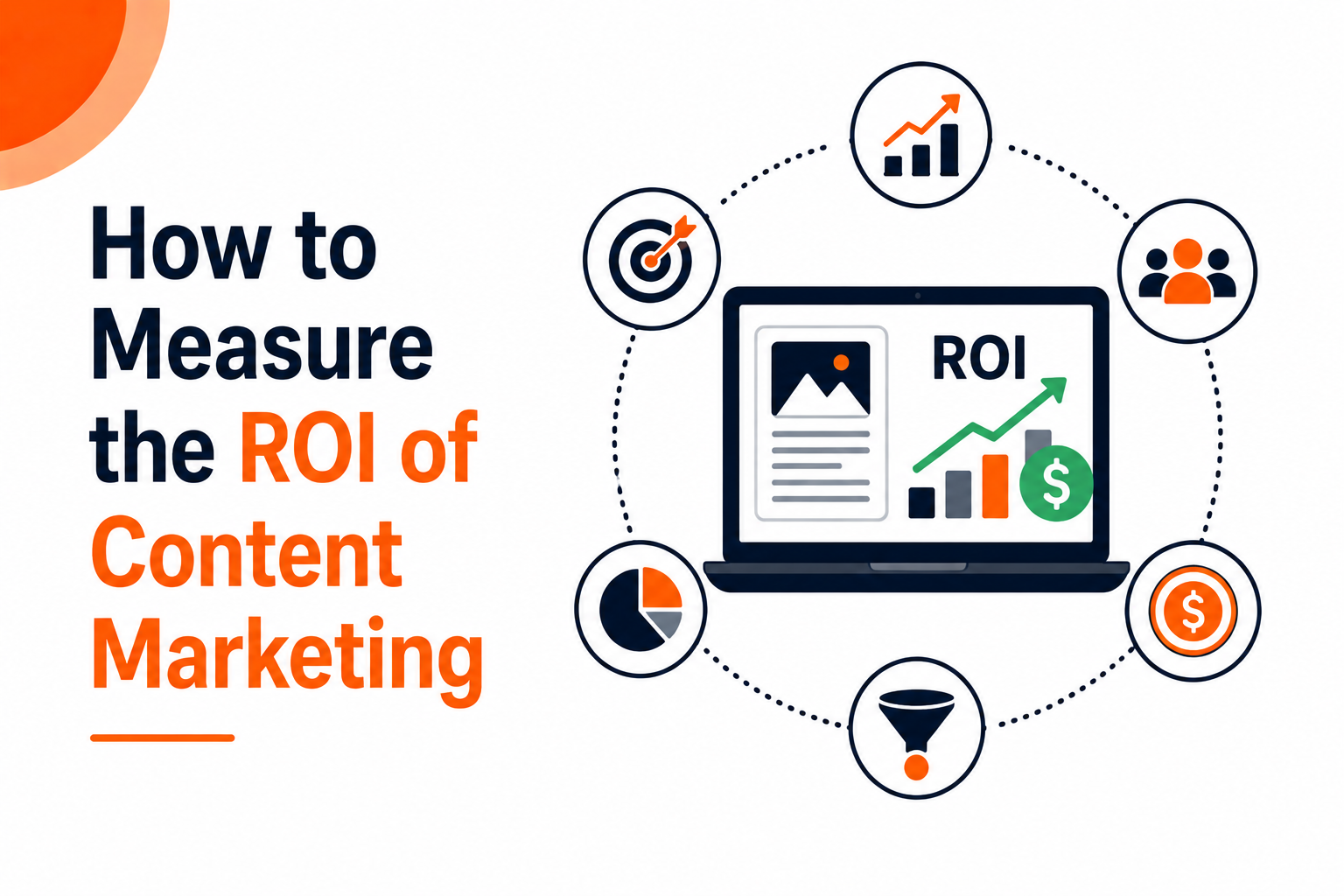
A simple formula: ROI equals (revenue from content minus cost of content) divided by cost of content, multiplied by 100 to get a percentage. A campaign that costs $2,000 and generates $6,000 in tracked revenue returns 200 percent, a number that gives owners something concrete to compare against other marketing channels.
ROI Driven Content Marketing
An ROI driven approach treats every piece of content as an investment with a defined purpose, not just another item on a publishing calendar. This means setting goals before writing starts instead of measuring after the fact and hoping for good results.
Building this approach into a content plan means:
- Assigning a specific goal to each piece, such as lead generation, brand visibility, or customer education, before a single word gets written.
- Setting a target metric tied to that goal, like form submissions for a landing page or time on page for a guide.
- Reviewing performance on a set schedule, comparing actual results against the target instead of letting content sit unreviewed for months.
- Cutting or updating pieces that underperform instead of leaving old content live simply because it sits on the site.
- Reinvesting in formats and topics that already show good returns, doubling down on what the data proves works.
This kind of discipline turns content marketing from a guessing game into a channel that can be judged the same way a business judges any other spend.
ROI Content Marketing vs Native Advertising
Native advertising buys placement, while content marketing built for SEO earns it over time, and that difference changes how each one performs financially. Native ads deliver traffic and conversions quickly, but that traffic disappears the moment the budget stops.
Here is how the two compare on ROI:
- Cost pattern: Native advertising charges per placement or click, so cost stays constant regardless of how long a campaign runs. Organic content carries an upfront production cost but keeps generating traffic for months or years without ongoing spend.
- Speed to results: Native ads produce traffic within days. SEO focused content usually takes a few months to climb rankings and build steady traffic.
- Longevity: Once a native ad budget ends, traffic stops immediately. A well ranked blog post or guide can keep drawing visitors long after it was published.
- Compounding value: Organic content can pick up backlinks and shares over time, improving its rankings further. Native ads don’t compound in the same way since each placement is a one time purchase.
- Trust factor: Readers often view organic search results as more credible than sponsored placements, which can affect click through rates and conversion rates over time.
Businesses with tight short term goals sometimes lean on native advertising for a quick boost, while those focused on long term growth get better returns from organic content once it has time to mature.

B2B Content Marketing ROI
B2B companies deal with longer sales cycles, higher deal values, and more decision makers involved in each purchase, all of which change how ROI gets measured. A single piece of content rarely closes a B2B deal by itself.
Metrics that carry more weight in a B2B context include:
- Marketing qualified leads (MQLs) generated from gated content like whitepapers, case studies, and detailed guides.
- Sales cycle influence, tracking which content pieces a prospect engaged with before becoming a customer.
- Deal size correlation, checking if leads who consumed certain content types close larger deals than those who didn’t.
- Account based engagement, measuring how many people within a target company interacted with content before a sale closed.
- Customer lifetime value, since B2B relationships often span years and a single sale understates the real return.
B2B ROI calculations often need a longer measurement window, sometimes six months to a year, since the buying committee moves slower and content plays a supporting role across multiple touchpoints instead of driving one direct conversion.
How to Measure Content Marketing ROI for SaaS
SaaS companies sell a recurring product, so ROI measurement needs to account for subscription revenue instead of a single purchase. A blog post that brings in a customer paying monthly generates value long after the initial conversion.
Steps for measuring SaaS content ROI:
- Track free trial signups or demo requests that originated from specific content pieces, using UTM parameters and CRM attribution.
- Calculate customer acquisition cost (CAC) for content driven signups compared to paid channels, showing if organic content brings in cheaper customers.
- Monitor trial to paid conversion rates by content source, since some topics may attract higher intent visitors than others.
- Factor in monthly recurring revenue (MRR) from content driven customers, not just the first payment, to capture the full value over a subscription’s lifetime.
- Watch churn rates for customers acquired through content, since content that attracts the wrong audience can lead to higher cancellation rates even if signup numbers look good.
SaaS companies that ignore lifetime value and focus only on first month revenue often undervalue content that brings in loyal, long term subscribers.
How to Evaluate ROI of Content Marketing Agency
Hiring an agency for content marketing means the ROI conversation needs to include the agency’s fees on top of production costs, and owners should hold agencies to clear, measurable standards.
Questions worth asking when evaluating an agency’s ROI include:
- Does the agency set specific, trackable goals for each piece of content before it gets published?
- Are monthly reports tied to business outcomes like leads and sales, or just vanity metrics like page views and social shares?
- Can the agency show past case studies with real before and after numbers from similar clients?
- Does the agency adjust strategy based on performance data, or does it keep producing the same type of content regardless of results?
- How long does the agency say it takes to see meaningful ROI, and does that timeline match realistic expectations for organic growth?
An agency that can’t clearly explain how it measures success, or that resists sharing raw data, is a warning sign worth taking seriously before signing a long term contract.
Crescita Solutions: Measuring Content ROI That Actually Holds Up
Crescita Solutions builds ROI measurement into every content marketing engagement from the very first strategy call. Every piece of content gets a defined goal, a target metric, and a review schedule before it ever gets published, so clients never have to guess if their investment is working.
Working with Crescita Solutions gives clients:
- Clear ROI reporting that connects content directly to leads, sales, and revenue, not just traffic numbers.
- Goal setting for every content piece based on the client’s actual business priorities.
- Regular performance reviews that lead to adjustments, cutting what doesn’t work and scaling what does.
- Attribution setup connecting Google Analytics, CRMs, and ad platforms so no lead gets lost between systems.
- Transparent case studies showing client results, not generic industry averages.
Clients working with Crescita Solutions get a partner that treats content as a measurable investment from day one, not a creative exercise disconnected from business goals. This approach keeps content marketing accountable, and it gives owners the confidence to keep investing because the numbers back it up.