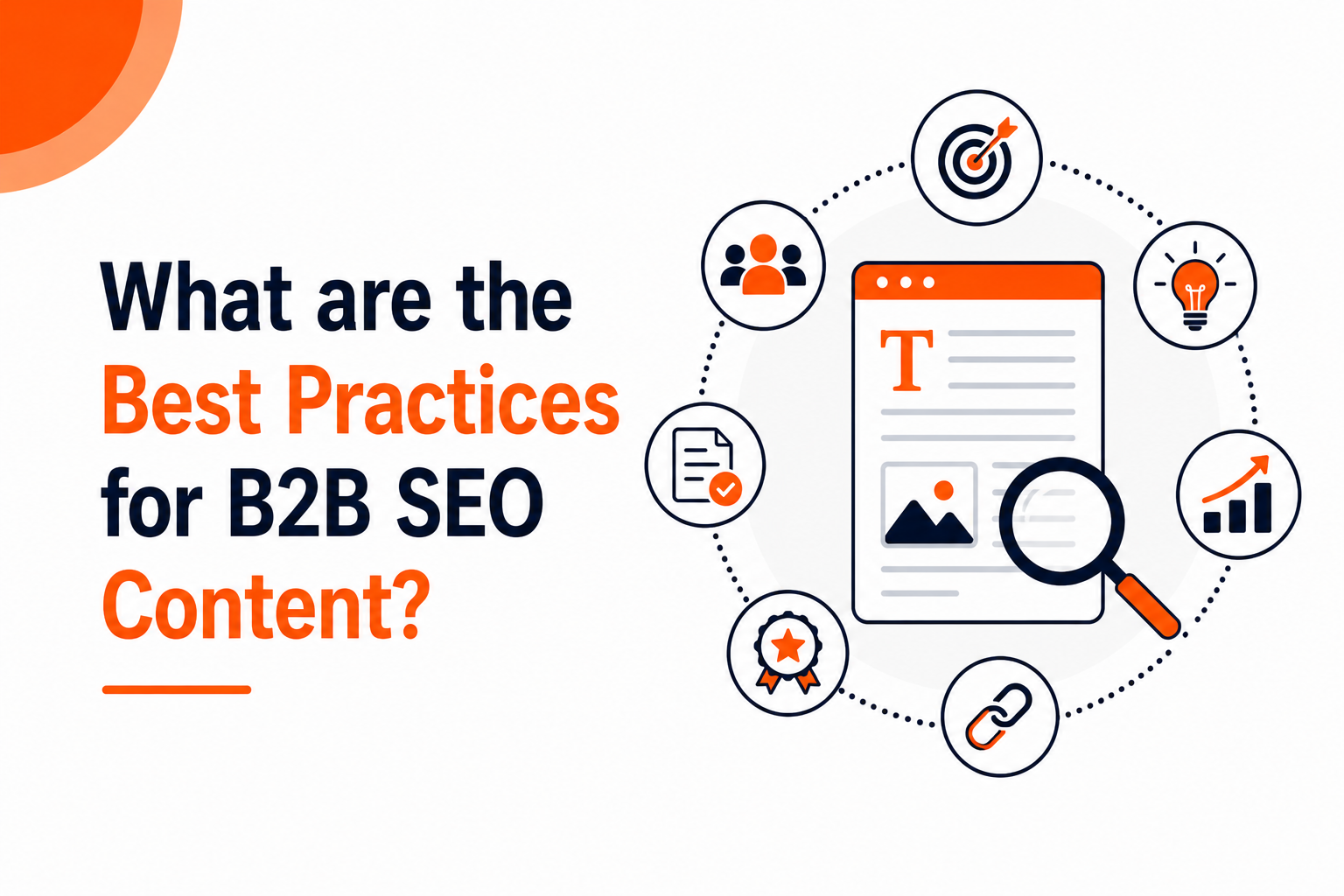
What are the Best Practices for B2B SEO Content?
Producing content that performs well in search requires more than good writing. The best practices for B2B SEO content combine editorial quality with technical precision, structured formatting, and an understanding of how both traditional search engines and AI-powered search systems evaluate and surface information. B2B buyers research extensively before making contact, and the content they find during that research shapes their first impression of a company’s expertise and credibility.
Getting these practices right across blog content, press releases, and technical foundations is what separates B2B companies that build lasting organic visibility from those that produce content nobody finds.
Best Practices for SEO-Friendly Blog Posts
Blog content remains one of the most effective ways for B2B companies to build topical authority and attract buyers at every stage of their research process. The following practices separate posts that rank and convert from posts that sit unread.
- Target one primary keyword with clear intent: Every post should map to a specific search query and a specific stage of the buyer journey. Trying to rank for too many unrelated terms in a single post dilutes relevance signals.
- Front-load value in the introduction: The opening paragraph should answer the core question or establish the value of the post immediately, without unnecessary preamble. Readers and search engines both reward content that gets to the point.
- Use descriptive, hierarchical headings: H2 and H3 headings should accurately describe the content beneath them and follow a logical structure that search engines can parse to understand the page’s topic coverage.
- Write for the specific buyer persona: Generic business content underperforms. Posts written with a clear picture of the reader, their role, their pain points, and their vocabulary consistently produce stronger engagement.
- Include original insight or data: Posts that synthesize information already available elsewhere rarely earn links or stand out. Original research, internal data, case studies, or expert commentary give a post something new to offer.
- Optimize images and media: Descriptive file names, alt text, and compressed file sizes support both accessibility and page speed, both of which influence rankings.
- Build internal links deliberately: Every new post should link to relevant existing content, and existing high-authority pages should be updated to link to new content where relevant. This distributes authority across the site and helps search engines understand topical relationships.
- End with a clear next step: A relevant call to action, whether it points to a related resource, a product page, or a contact form, turns informational traffic into pipeline opportunity.
Best Practices for B2B SEO in AI-Powered Search
The rise of AI-powered search experiences, including Google’s AI Overviews and standalone AI search tools, has changed how content needs to be structured to earn visibility. These systems synthesize information from multiple sources to generate direct answers, and the content that gets pulled into those answers follows identifiable patterns.
- Answer questions directly and early: AI systems favor content that states a clear answer near the top of a section, followed by supporting detail. Burying the answer beneath lengthy context reduces the chance of being selected as a source.
- Structure content around specific questions: Organizing sections around the actual questions buyers ask, phrased as headings, makes content easier for AI systems to match against user queries and extract cleanly.
- Use structured data markup extensively: Schema for FAQs, articles, organizations, and products helps AI systems understand context and authorship, increasing the likelihood of accurate attribution and citation.
- Establish clear authorship and expertise signals: AI search systems weigh credibility heavily. Author bios, credentials, and clear sourcing of claims all contribute to a page being treated as a trustworthy reference.
- Maintain factual accuracy and consistency across the site: AI systems cross-reference information, and inconsistencies between pages, outdated statistics, or contradictory claims can undermine how a domain is treated as a source.
- Write in clear, declarative sentences: Content that hedges excessively or buries claims in qualifying language is harder for AI systems to extract confidently. Direct, well-supported statements are more likely to be surfaced.
- Keep content current: AI search systems prioritize freshness for topics where information changes. Regularly updating statistics, examples, and references signals that a page reflects the current state of a subject.

Best Practices for SEO-Friendly Press Releases
Press releases serve a dual purpose for B2B companies: they communicate news to media and stakeholders, and when optimized correctly, they contribute to a company’s backlink profile and search visibility.
- Include a relevant keyword naturally in the headline: The headline should reflect newsworthy language first, but where a target keyword fits naturally, including it supports discoverability without compromising the announcement’s tone.
- Front-load the most important information: The first paragraph should cover the core announcement completely, following standard press release structure, which also happens to align with how search engines weigh early content on a page.
- Link back to relevant pages on the company website: A press release announcing a new product, partnership, or executive hire should link to the corresponding page on the company’s site, passing authority and directing interested readers to more detail.
- Avoid excessive keyword repetition: Press releases that read as obviously SEO-driven instead of newsworthy lose credibility with journalists and readers, and can appear manipulative to search engines as well.
- Distribute through reputable channels: Press release distribution services vary widely in quality. Placement on low-quality, spam-flagged distribution networks can do more harm than good. Targeted outreach to relevant industry publications produces better long-term value than mass distribution.
- Use structured data for news content: NewsArticle or PressRelease schema markup helps search engines categorize the content correctly and can improve visibility in news-specific search results.
Best Practices for Technical SEO
Technical SEO forms the foundation that everything else depends on. Without it, even the best content can fail to rank because search engines cannot crawl, index, or properly understand the site.
- Maintain a clean, logical site architecture: Every important page should be reachable within a few clicks from the homepage, and the URL structure should reflect a clear topical hierarchy.
- Optimize Core Web Vitals: Page load speed, interactivity, and visual stability are direct ranking factors. Slow-loading pages or layout shifts during load create poor user experiences that search engines penalize.
- Ensure mobile responsiveness across all pages: Google indexes the mobile version of a site by default. Any content, functionality, or navigation that does not work properly on mobile creates indexing and ranking problems.
- Implement canonical tags correctly: Duplicate or near-duplicate content needs clear canonical signals pointing search engines to the preferred version, preventing dilution of ranking signals across multiple URLs.
- Audit and fix broken links and redirect chains regularly: Broken internal links waste crawl budget and create poor user experiences. Redirect chains slow page load and can dilute the value passed through redirects.
- Use XML sitemaps and keep them current: Sitemaps should accurately reflect the pages a site wants indexed, updating automatically as content is added or removed.
- Manage indexation deliberately: Not every page on a site should be indexed. Thin pages, duplicate filtered views, and low-value utility pages should be controlled through noindex tags or robots.txt to keep search engines focused on priority content.
- Implement structured data across the site: Schema markup for organizations, breadcrumbs, articles, and products helps search engines understand page content and can produce enhanced search result features.
Crescita Solutions: Choosing a B2B SEO Company
The choice of a B2B SEO company means evaluating an agency’s ability to execute across every practice covered in this article, consistently and at the standard B2B buyers expect. Crescita Solutions is a full-service web design, development, and SEO company built to deliver exactly that.
What sets Crescita apart for B2B companies:
- Content built around buyer intent and persona research, not generic templates that could apply to any industry
- Technical SEO expertise that addresses site architecture, Core Web Vitals, indexation, and structured data as ongoing priorities, not one-time fixes
- Forward-looking optimization for AI-powered search, structuring content so it performs well in traditional rankings and AI-generated answers alike
- Press release and digital PR support that builds backlinks through credible, relevant placements rather than mass distribution
- Transparent reporting tied to traffic, rankings, and pipeline contribution, giving B2B leadership teams a clear view of return on investment
- Cross-functional collaboration, working with internal marketing, sales, and product teams to ensure content reflects how the business actually communicates with its buyers
B2B companies that partner with Crescita get a team that treats content as a long-term asset built on a solid technical foundation, produced with subject matter depth, and structured to perform across every search environment buyers use today.