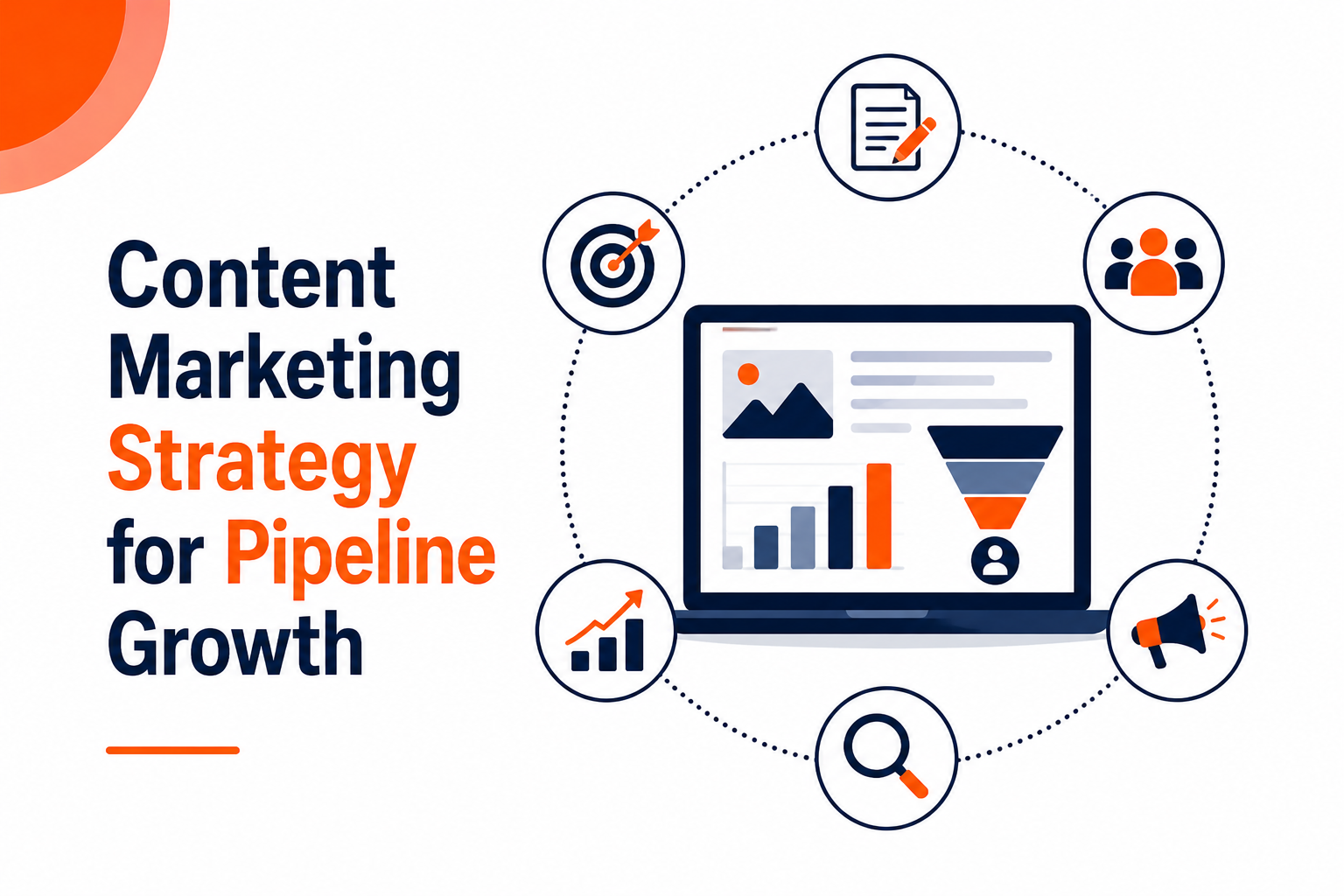
5 Content Marketing Strategy for Pipeline Growth
A content marketing strategy for pipeline growth looks different from one built for traffic or brand awareness, since every piece of content needs a clear connection to leads and revenue instead of just page views. Many businesses publish consistently without tying that output back to the sales pipeline, which makes it hard to justify the budget once leadership asks for numbers.
This article breaks down 5 content marketing strategies that actually move pipeline, how SaaS companies should adjust the approach, how product led growth changes the content playbook, and how Crescita Solutions builds pipeline focused content programs for its clients.
1. Map Content to the Buyer Journey
Content built for pipeline growth needs a clear role at each stage of the buyer journey, instead of treating every blog post as a generic top of funnel piece.
This strategy usually involves:
- Awareness stage content: Broad educational pieces that answer questions a prospect asks before they know a specific solution is available.
- Consideration stage content: Comparison guides and feature breakdowns for prospects actively evaluating different options.
- Decision stage content: Case studies, pricing pages, and objection handling content aimed at prospects close to a purchase decision.
- Consistent internal linking: Pieces at each stage should link toward the next step in the journey, guiding a reader from awareness content toward a decision page.
This kind of mapping keeps a team from producing pieces that all target the same stage while leaving other parts of the funnel empty.
2. Build Every Topic on Confirmed Keyword Demand
Pipeline content only works if it gets found, so every topic needs search volume behind it before a single word gets written.
This strategy usually involves:
- Keyword research tools: Google Search Console, Ahrefs, or SEMrush confirm actual search volume and competition for a given term.
- Intent matching: A topic should match what searchers actually want, a definition, a comparison, or a how to guide.
- Competitive gap analysis: A review of what competitors already rank for reveals topics worth targeting and gaps worth filling.
- Priority based on buying intent: Terms closer to a purchase decision, like product comparisons, often deserve priority over broad informational terms with lower conversion potential.
Confirmed demand keeps a content calendar from filling up with topics nobody actually searches for.
3. Link Content Directly to Lead Capture
Content that never asks for anything rarely produces leads, so pipeline focused content needs a clear path toward capturing contact information.
This strategy usually involves:
- Gated resources: Templates, checklists, or in depth guides offered in exchange for an email address.
- Calculators and interactive tools: Free tools tied to a specific business problem give visitors a reason to share information for a personalized result.
- Clear calls to action: Every piece of content should point toward a next step, such as a consultation or demo request, instead of ending abruptly.
- Contextual offers: The offer attached to a piece of content should match its stage in the buyer journey, since a beginner guide and a pricing page call for different asks.
Content without a capture mechanism might build awareness, but it rarely shows up directly in pipeline numbers.
4. Track Content Against Pipeline Data
Pipeline focused content needs measurement tied to actual deals, not just traffic and rankings that look good in isolation.
This strategy usually involves:
- CRM integration: A website analytics connection to a CRM traces every lead back to the specific page that brought them in.
- Attribution modeling: A method for how credit gets assigned when a prospect interacts with several pieces of content before converting.
- Deal stage tracking: A record of which content pieces a prospect engaged with at each stage of their journey through the sales pipeline.
- Revenue reporting: Monthly reports that connect content output to closed deals, not just leads generated.
This kind of tracking turns content from a cost center into a measurable revenue driver leadership can evaluate directly.
5. Review and Cut Underperforming Content Monthly
A pipeline focused strategy stays lean by reviewing performance regularly and removing or reworking content that fails to produce results.
This strategy usually involves:
- Regular performance reviews: A monthly or quarterly check of traffic, rankings, and lead generation for every piece of content.
- Clear performance thresholds: Defined expectations for what counts as underperforming, so decisions about updating or removing content stay consistent.
- Content consolidation: One solid page built from several thin, overlapping pieces often performs better than leaving them separate.
- Redirects for removed content: Pages that get removed should redirect to a relevant, better performing page instead of leaving a dead end.
This ongoing discipline keeps a content library focused on what actually produces pipeline instead of pages that quietly do nothing.

SaaS Growth Marketing Strategy
SaaS companies sell a recurring product with a longer research phase, so pipeline content needs to account for both the initial sale and the relationship after signup. Effective SaaS pipeline strategies include comparison and alternative pages that capture buyers already searching for competitor terms, case studies with measurable results like time saved or revenue generated, free tools or calculators that give prospects a reason to share contact information, and content written separately for each stakeholder involved in a typical B2B SaaS purchase decision.
Product Led Growth Marketing Strategy
Product led growth relies on the product itself to drive acquisition and expansion, which shifts some of the content burden away from top of funnel blog posts. In app and onboarding guides help new users reach value quickly during the important first weeks of a trial, self serve documentation lets users solve problems without contacting support, and feature announcement content helps existing users discover functionality they might otherwise miss. Community content, forums, user groups, and customer stories, builds a sense of connection that keeps users engaged beyond the product alone.
Crescita Solutions: Content Strategy Built for Pipeline Growth
Content that never connects to actual pipeline numbers is one of the most common complaints business owners raise about their marketing spend, and Crescita Solutions built its process specifically to close that gap. Every content plan starts with a conversation about pipeline goals, so the topics chosen from day one already point toward the outcomes leadership actually cares about.
Companies working with Crescita Solutions get:
- A content strategy mapped directly to pipeline stages, from early awareness through late stage decision content.
- CRM integration that connects specific pages to leads and closed deals, not just page views.
- SaaS and product led growth expertise for companies whose sales motion depends on either approach.
- Monthly pipeline reporting that shows which content actually influenced revenue, giving leadership a clear answer when budget questions come up.
- Ongoing content adjustments based on what the pipeline data shows, cutting underperforming topics and expanding on what already converts.
A pipeline focused content program takes longer to set up than a standard blog calendar, since it requires CRM access, clear attribution, and buy in from both marketing and sales teams. Companies willing to put that groundwork in place with Crescita Solutions end up with a content engine that leadership can point to directly when explaining where new revenue came from.