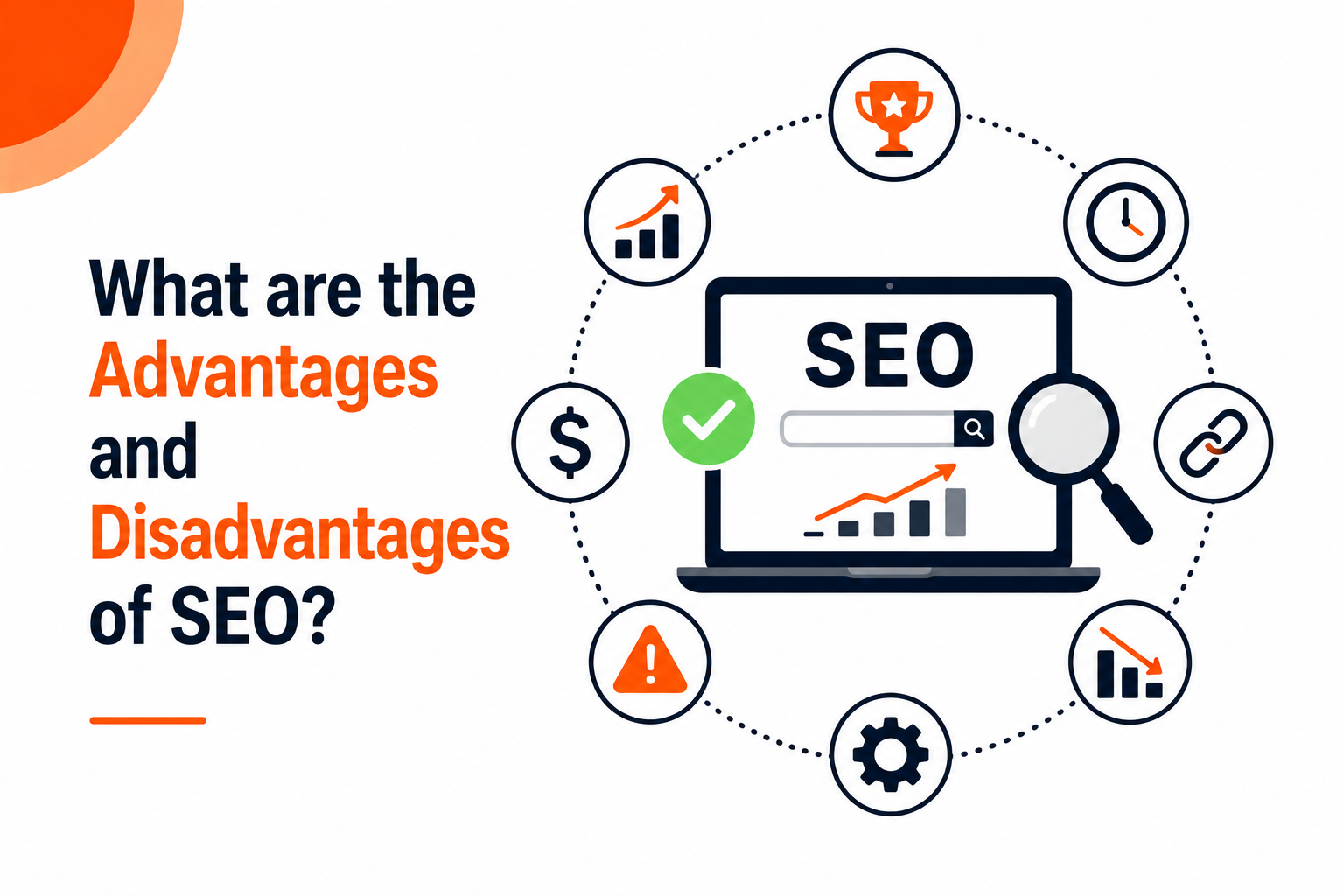
What are the Advantages and Disadvantages of SEO?
The advantages and disadvantages of SEO shape one of the biggest decisions a business makes about where marketing budget goes. SEO can bring steady, high intent traffic to a website for years without an ongoing cost per click, but it also demands patience, technical upkeep, and content investment that some businesses underestimate before getting started.
A clear picture of both sides helps a business decide how much of its marketing budget should go toward search, and what to expect once that investment starts producing results. This guide breaks down the advantages of SEO, the honest disadvantages, how the picture changes for an in house team compared to an agency, and what businesses should look for when choosing outside help.
Advantages of SEO
SEO offers a few benefits few other marketing channels can match.
Traffic that compounds over time. A well optimized page can rank for years, sending visitors to a site long after the original work finished. Unlike paid ads, which stop the moment a budget runs out, organic rankings keep producing traffic without a recurring cost per visitor.
High intent visitors. People searching for a specific product, service, or answer already have a need in mind, so organic search traffic tends to convert at a higher rate than cold outreach or broad awareness advertising.
Lower cost per lead over time. SEO takes upfront investment, but a page that continues ranking for years spreads that cost across an ever growing number of visitors, often producing a lower cost per lead than paid channels once a page matures.
Credibility with searchers. Many users trust organic results more than paid ads, since a high ranking often signals relevance and authority and not simply the highest bidder.
Insight into customer intent. Search data shows exactly what questions, problems, and product needs an audience brings to a search engine, giving a business direct insight into what customers actually want to know.
Disadvantages of SEO
SEO comes with limitations a business needs to plan around.
Slow results. SEO rarely produces meaningful traffic within the first few weeks. Most campaigns need several months before rankings climb enough to bring in noticeable visitors, and competitive industries can take even longer.
Ongoing algorithm changes. Search engines update ranking systems on a regular basis, and a page ranking well today can drop after an update with little warning, sometimes needing a rewrite or a technical fix to recover.
Technical upkeep. Site speed, mobile usability, broken links, and structured data all affect rankings, and a site left unmaintained tends to lose ground to competitors actively investing in these areas.
No guaranteed outcome. Unlike paid ads, where a set budget produces a predictable amount of visibility, SEO offers no guarantee that a page will rank, since rankings depend on competition, search engine algorithms, and factors outside full control.
Resource demands. Producing quality content consistently, building backlinks, and fixing technical issues all take time and skill, and a business without dedicated staff or an outside partner often struggles to keep pace.
Advantages and Disadvantages of In House SEO Teams
An SEO team built inside a company offers a different set of tradeoffs compared to hiring an outside agency.
An in house team knows the product, brand voice, and internal systems better than any outside partner could, which often produces content that fits the company’s tone naturally. Communication also moves faster internally, since an in house specialist sits in the same meetings as product and sales teams and hears about upcoming changes as they happen.
The costs run higher than many companies expect, though. A capable in house SEO hire, or a small team covering content, technical SEO, and link building, costs significantly more in salary and benefits than most companies budget for, and finding qualified candidates in a competitive hiring market takes time.
An in house team also faces a knowledge gap problem. SEO covers several disciplines: content writing, technical website work, data analysis, and outreach for backlinks, and few individuals handle all of these well. A single in house hire often ends up capable in one area and weak in others, while an agency brings a full team with specialists across each discipline.
Smaller companies especially feel this tradeoff. A startup or small business rarely has the budget to hire a full in house team covering every SEO discipline, making an outside partner the more sensible starting point until the business grows large enough to justify a dedicated internal function.
Crescita Solutions: SEO Agency for Businesses
Crescita Solutions gives businesses the advantages of SEO without the resource gaps that come from building a team from scratch. Our team covers technical SEO, content strategy, and link building together, so a client gets full coverage across every discipline SEO actually needs, not just one piece of it.
We handle the ongoing work that trips up businesses managing SEO alone: algorithm updates, technical audits, and content refreshes that keep rankings from slipping once they climb. Clients get regular reporting tied to business outcomes, not just rankings and traffic numbers disconnected from revenue.
For businesses weighing an in house hire against outside help, Crescita offers the specialist coverage a single in house role usually cannot, at a cost that fits a marketing budget more predictably than building and managing a full internal team. The advantages of SEO become real once a business has the right mix of skills behind the work, and Crescita builds that mix from day one so clients see the upside of search without carrying every disadvantage alone.