SEO Tips for E-Commerce Product Pages
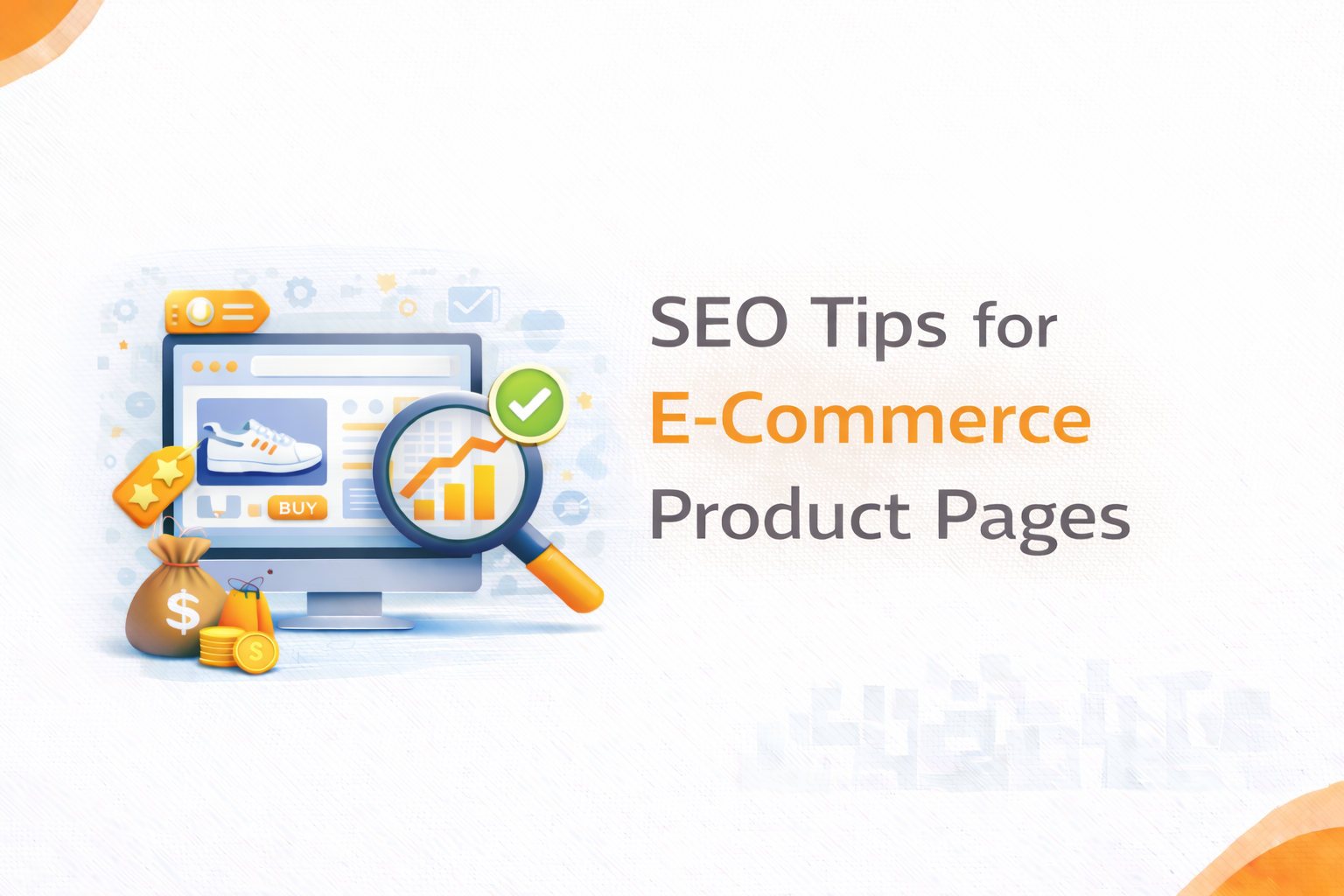
Most e-commerce stores put serious effort into their homepage and maybe their category pages, then treat product pages as an afterthought. That is a costly mistake. Product pages are where purchase intent is highest, where buyers land after clicking a Google result, and where the sale either happens or it does not. Getting these pages right from an SEO standpoint is not a minor optimization, it is the foundation of sustainable organic growth. These SEO tips for e-commerce product pages cover everything from technical structure to content strategy, so your store can rank, convert, and compete.
SEO Best Practices for E-Commerce Product Pages
Before touching any individual page, it helps to understand what Google is actually looking for when it evaluates product pages. The search engine is trying to determine two things: how relevant the page is to a search query, and how trustworthy and useful it is for the person searching. Here are the core best practices that serve both goals.
Use the exact product name in the title tag and H1
Your title tag is one of the most direct signals you send to Google about what the page is for. It should include the product name, a relevant descriptor, and ideally the brand name. Something like “Men’s Waterproof Hiking Boots | BrandName” is far more useful than “Product Detail Page” or a vague title auto-generated by your platform.
Write original product descriptions
This is where most stores fall short. Copy-pasting the manufacturer’s description creates duplicate content across dozens of sites selling the same product, and Google has no reason to rank yours over theirs. Write descriptions that speak directly to your buyer, address common questions, highlight benefits over features, and naturally include the terms someone would search for when looking for that product.
Add structured data (schema markup)
Product schema tells Google exactly what kind of page this is and passes along information like price, availability, ratings, and reviews. When implemented correctly, this can produce rich results in the search listings, which increases click-through rates even when your ranking position stays the same. For WooCommerce and Shopify stores, plugins and apps can handle the basics, but custom implementation gives you more control.
Optimize your URLs
Product page URLs should be clean, descriptive, and free of unnecessary parameters. A URL like /mens-waterproof-hiking-boots performs better than /product?id=7492&cat=3. Short, readable URLs are easier for Google to process and more trustworthy to users.
Get reviews on the page
User-generated content in the form of reviews adds fresh, keyword-rich text to your product pages without any extra content effort on your part. Reviews also build social proof, which directly influences conversion rates. Google indexes this content and it contributes to the page’s relevance for long-tail search queries.

How to Optimize E-Commerce Product Pages for SEO
Knowing the best practices is one thing. Actually building these into your pages is where most stores need a structured approach. Here is how to move from principles to execution.
Start with keyword research at the product level
Each product page should be built around a specific search term or cluster of closely related terms. Think about what a buyer would type when they are ready to purchase, not just when they are casually browsing. Terms like “buy waterproof hiking boots online” or “lightweight trail running shoes men size 10” show strong purchase intent. These are the terms your page copy, title tags, and metadata should be built around.
Optimize product images properly
Images are a major part of product pages and most stores treat them as invisible from an SEO standpoint. Every image should have a descriptive file name before it is uploaded, for example mens-waterprdf-hiking-boots-brown.jpg beats IMG_4029.jpg every time. Alt text should describe the image accurately and include the product name where it fits naturally. Compress images to keep file sizes low without sacrificing visual quality, as slow-loading images are one of the most common reasons product pages underperform.
Build internal links into and out of your product pages
Your category pages should link to your top product pages. Your blog content should reference relevant products where it makes sense. Product pages themselves can link to related items or bundle suggestions. This internal linking structure distributes authority across the site and helps Google understand the relationships between pages.
Handle out-of-stock products carefully
Do not delete product pages when items go out of stock. If the product will return, keep the page live with a notification option and updated messaging. If the product is discontinued permanently, redirect the URL to the most relevant alternative page. Deleting pages and returning 404 errors wastes any authority those pages had built and creates a poor user experience.
Prioritize Core Web Vitals on product pages
Google’s Core Web Vitals, which include Largest Contentful Paint, Interaction to Next Paint, and Cumulative Layout Shift, have a direct impact on rankings and user experience. Product pages with large hero images, video embeds, and multiple app scripts are particularly vulnerable to poor scores. Regular testing through Google Search Console or PageSpeed Insights will show you where the problems are.
Use FAQ sections strategically
A short FAQ section at the bottom of a product page can target long-tail question-based queries that a buyer might search before purchasing. Questions like “Is this jacket machine washable?” or “What is the weight limit for this backpack?” serve both the user and the search engine. They add relevant content without cluttering the main product description.
Avoid thin pages
A product page with a single image, a two-line description, and a price is thin content. Google does not have enough to work with and the buyer does not have enough to make a confident purchase. Aim for product pages that are informative, covering dimensions, materials, use cases, compatibility, care instructions, and anything else that reduces friction in the buying decision.
Crescita Solutions: Best SEO for E-Commerce Product Pages
At Crescita Solutions, we work with e-commerce teams who understand that product page SEO is not a one-time task. It is an ongoing process of auditing, testing, improving, and scaling.
Our approach starts with a full audit of your existing product pages to identify gaps in title tags, metadata, structured data, image optimization, and content quality. From there, we build a prioritized roadmap based on the revenue potential of each fix. High-traffic, high-intent product categories get attention first.
We also work closely with development teams to resolve technical issues that hold product pages back, slow load times, crawl budget problems, faceted navigation creating duplicate URLs, and more. Clean technical foundations make every other SEO effort more effective. For stores on WooCommerce, Shopify, or custom-built platforms, our team brings direct platform experience that shortens the gap between identifying a problem and actually fixing it.
If your product pages are not ranking where they should, or if they are ranking but not converting, that is a solvable problem. Crescita Solutions helps e-commerce brands close that gap with SEO strategy that is built around buyer behavior and measurable results.