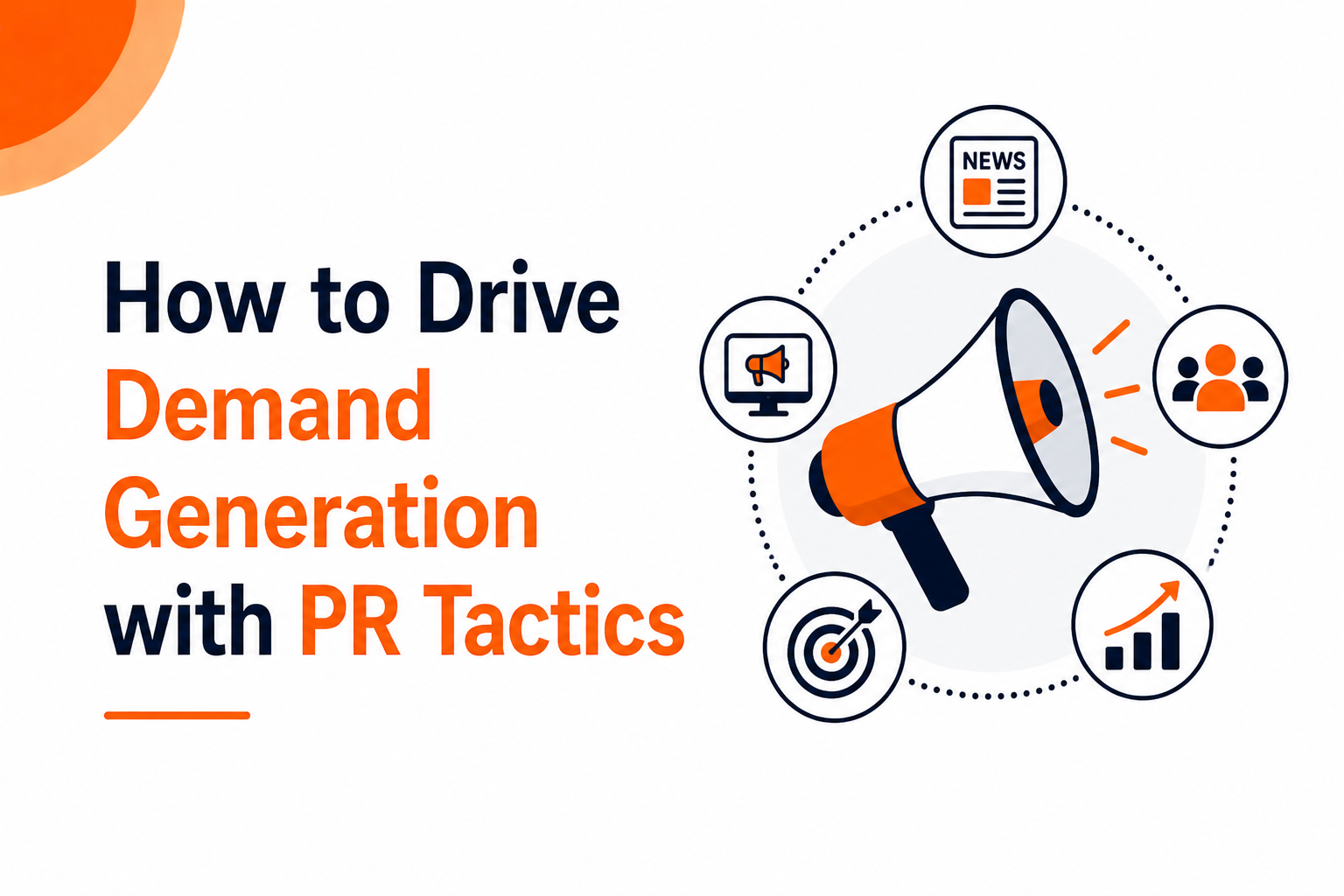
How to Drive Demand Generation with PR Tactics
Most B2B companies treat public relations and demand generation as separate functions with separate budgets, separate teams, and separate goals. PR chases coverage. Demand generation chases pipeline. The two rarely talk to each other, and the result is that both functions underperform what they could achieve together.
PR that is built around demand generation outcomes produces coverage that does more than raise brand awareness. It generates backlinks that strengthen organic search, drives referral traffic from audiences that match the ideal customer profile, builds third-party credibility, and creates content assets that the demand generation program uses across channels for months after the initial placement.
Traditional media relations often functions in a vacuum, but the most effective modern programs act as a direct engine for your sales funnel. To truly drive demand generation with PR tactics, you must move beyond simple brand awareness and align your outreach with the buyer’s journey. This guide breaks down the framework for an integrated approach, highlighting the specific actions that move the needle on revenue and lead volume.
Why PR Is One of the Most Underleveraged Demand Generation Channels
The demand generation value of earned media is consistently underestimated because it is harder to attribute than paid channels. There is no cost per click to optimize, no conversion pixel to fire, and no dashboard that shows a direct line from a Forbes byline to a closed deal. This attribution difficulty causes most demand generation programs to underinvest in PR even though the commercial impact, when measured correctly, often exceeds that of channels where attribution is easier.
The mechanisms through which PR drives demand generation are concrete and well-documented:
- Earned media placements produce backlinks from authoritative domains that strengthen organic search rankings for the keywords the demand generation program is built around.
- Coverage in publications read by ideal buyers drives direct referral traffic from audiences that are already pre-qualified by the editorial context.
- Third-party credibility from media coverage reduces the skepticism buyers bring to vendor-initiated outreach, improving response rates and conversion rates across sales and marketing touchpoints.
- Executive thought leadership in business media builds the personal authority of company leadership in ways that influence buying committee research before the formal evaluation process begins.
- Data-driven research reports published through earned media channels attract ongoing backlinks and organic search traffic that compounds in value long after the initial release.
These are not soft brand benefits. They are measurable inputs to organic search performance, lead quality, and sales cycle length.
Building a PR Strategy Around Demand Generation Outcomes
The shift from PR as a brand function to PR as a demand generation function starts with redefining what a successful media placement looks like. A successful placement from a demand generation standpoint is not just any coverage in any publication. It is coverage in the specific publications your ideal buyers read, on the specific topics your buyers are researching, that produces a backlink to a page on your site that is part of your organic search and lead capture strategy.
This redefinition changes how media targets are selected, how pitches are framed, and how the results are measured.
Target publications based on ideal buyer readership
The PR program should be built around a shortlist of publications where your ideal customers spend time, not a broad list of high-domain-authority sites. A fintech company targeting CFOs at mid-market companies should prioritize coverage in CFO-specific publications, financial operations media, and the business sections of publications those buyers read regularly.
Frame pitches around buyer problems, not product announcements
Journalists and editors are not interested in publishing vendor announcements. They are interested in angles that are relevant to their readers. Pitches that lead with a perspective on a problem the publication’s readers face, supported by data or expert insight, perform dramatically better than pitches that lead with product news. The PR program that produces demand generation outcomes is built around thought leadership angles, data-driven narratives, and expert commentary on industry trends, not press releases.
Use original research as the primary earned media vehicle
A proprietary research report, based on original data collected through a survey or from the company’s own platform, is the single most versatile PR and demand generation asset a B2B company can produce. It generates multiple media placements across publications covering the topic, each producing a backlink and referral traffic. It produces gated content for lead capture. It provides data points that sales teams use in prospect conversations. It builds the data-led credibility that positions the company as an authoritative source in its category.

Specific PR Tactics That Drive Demand Generation Results
Beyond the strategic framing, these are the specific tactics that produce the most consistent demand generation impact from PR activity.
Executive bylines in target publications
A bylined article published under the CEO’s or a domain expert’s name in a publication read by ideal buyers puts the company’s perspective in front of a pre-qualified audience without the friction of a paid ad. The byline should address a specific challenge or question that the target buyer is working through, demonstrate a point of view that reflects the company’s expertise, and link back to a relevant piece of content on the company’s site. Over time, a consistent byline program builds the executive’s authority as a trusted voice in the category.
Podcast appearances on shows your buyers listen to
B2B buyers increasingly consume long-form audio content, and a well-placed podcast appearance reaches an engaged audience during high-attention moments like commutes or exercise. Unlike a written article, a podcast appearance allows the executive to demonstrate personality, depth of knowledge, and communication style in ways that build personal trust. The episode also becomes a content asset that the demand generation program can distribute across channels and repurpose into written content.
Commentary and rapid response to industry news
Journalists covering B2B industries regularly need expert commentary on breaking news, research reports, and market developments. A PR program that has established the company’s executives as credible sources for rapid response commentary produces consistent earned media coverage with minimal production overhead. Each placement builds citation authority and puts the brand in front of audiences who are actively consuming news about the category.
Awards and recognition programs
Industry awards and analyst recognition programs produce third-party validation that buyers reference during vendor evaluation. A Gartner mention, a G2 category leader badge, or an industry award from a credible trade organization signals to a skeptical buyer that the company has been evaluated by a third party and found credible. These assets should be prominently featured across the demand generation content stack.
Competitor PR monitoring and positioning
When a competitor receives negative coverage, experiences a product failure, or loses a major customer publicly, buyers who are using that product begin researching alternatives. A demand generation program integrated with PR monitoring can respond quickly with comparison content, customer migration guides, and targeted outreach that captures these buyers at the exact moment they are most open to switching.
Crescita Solutions: Best Demand Generation Agency
Crescita Solutions integrates PR strategy directly into its demand generation programs, building earned media approaches that produce backlinks, referral traffic, and buyer credibility alongside the organic search, content, and pipeline infrastructure the rest of the program runs on.
Every PR engagement starts with a clear picture of the target buyer, the publications they read, and the topics they are researching. From there the team builds a media strategy that puts the client’s perspective in front of the right audiences through bylines, research reports, executive commentary, and podcast placements that all connect back to the demand generation goals the program is accountable to. Businesses that want PR producing pipeline outcomes, not just press clippings, are the ones Crescita Solutions is built to work with.