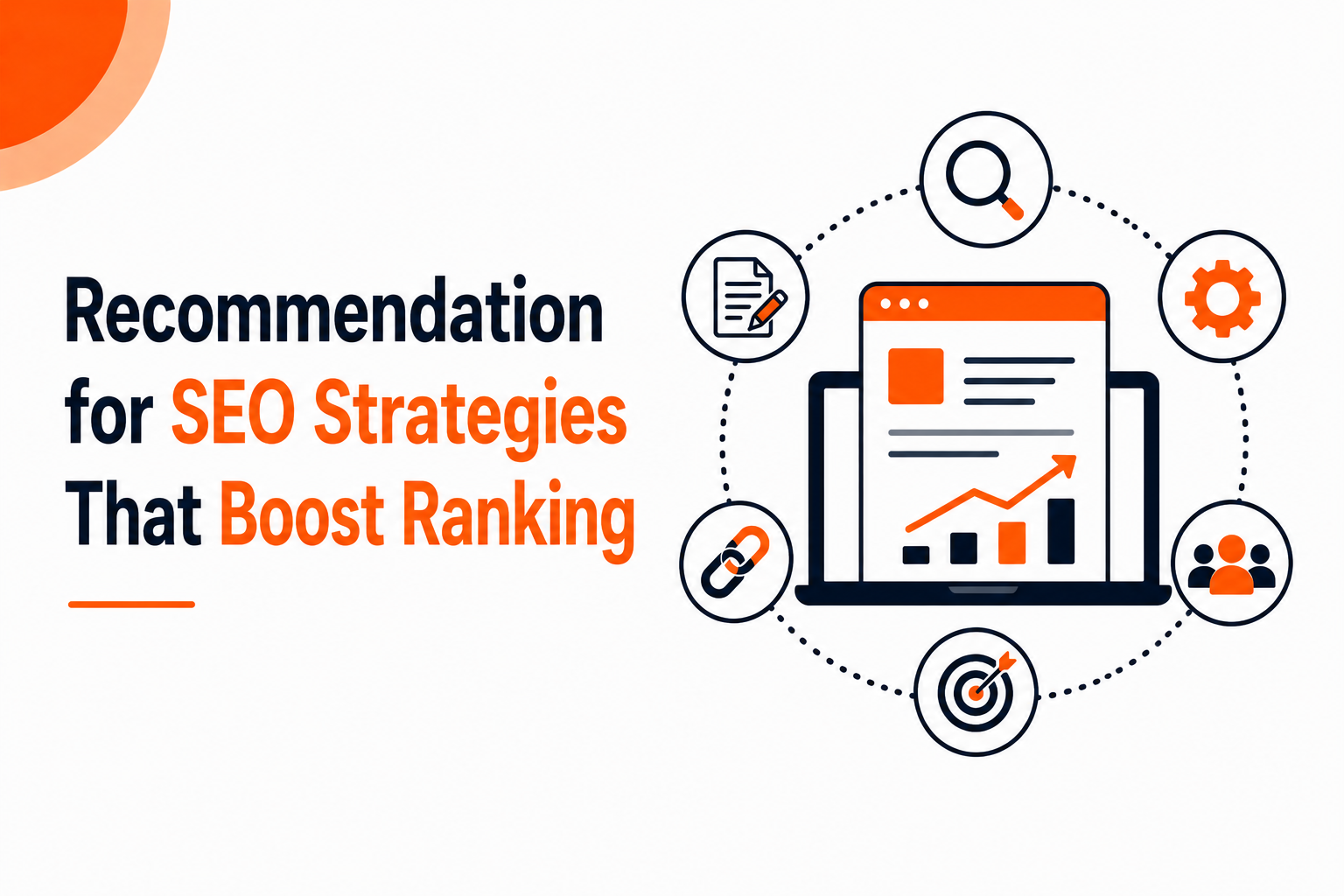
5 Recommendation for SEO Strategies That Boost Ranking
The right recommendation for SEO, acted on at the right time, is what separate websites that climb search rankings from those that plateau regardless of how much content gets published. Every website, from a newly launched startup to an established enterprise, has a set of specific technical and content improvements that would produce the greatest ranking gains if prioritized correctly.
The challenge most businesses face is not a lack of SEO advice; it is knowing which recommendations are worth acting on, in what order, and how to implement them in a way that produces lasting results. This article covers five foundational SEO recommendations that consistently move rankings, including keyword density, meta descriptions, alt text, and title optimization, and explains how Crescita Solutions delivers these improvements as part of a structured, results driven SEO program.
SEO Recommendation Template
A well structured SEO recommendation template gives businesses and their teams a repeatable framework for auditing pages, identifying gaps, and prioritizing improvements. Without a consistent structure, SEO audits produce inconsistent outputs and recommendations that are hard to act on systematically.
A professional SEO recommendation template covers five core areas:
Keyword Density and Placement
Keyword density refers to how frequently a target keyword appears relative to the total word count on a page. The recommended range for most pages sits between one and two percent. At this level, the term appears often enough to signal relevance to search engines without crossing into over optimization that can suppress rankings. Beyond raw density, placement is equally important. Target keywords should appear in the first one hundred words of the page, in at least one H2 heading, and naturally throughout the body content. Secondary and related keywords should be distributed across the page to build semantic relevance signals that support rankings for a broader set of related queries.
Meta Description Optimization
A meta description is the short text that appears beneath a page title in search results. It does not directly influence rankings, but it has a significant impact on click through rate, which affects how much organic traffic a page actually receives from its ranking position. An effective meta description sits between one hundred fifty and one hundred sixty characters, includes the target keyword, communicates a clear benefit or reason to click, and ends with a subtle call to action. Pages with generic or missing meta descriptions consistently underperform in click through rate compared to pages with well crafted descriptions, even when their ranking positions are identical.
Alt Text for Images
Alt text serves two functions: it tells search engines what an image depicts, and it provides a text alternative for visually impaired users who access content through screen readers. From an SEO standpoint, images without alt text are invisible to search engines, which means they contribute nothing to a page’s relevance signals and miss the opportunity to rank in image search results. Effective alt text describes the image accurately in plain language, incorporates the target keyword where it fits naturally, and avoids keyword stuffing. A product image on an ecommerce page, for example, should have alt text that describes the product specifically, including color, model, or distinguishing feature, along with a naturally placed keyword.
Title Tag Recommendations
The title tag is the single most important on page SEO element. It appears as the clickable headline in search results and is one of the strongest signals search engines use to determine a page’s relevance to a query. An optimized title tag places the target keyword as close to the beginning as possible, stays within fifty to sixty characters to avoid truncation in search results, and communicates a clear, compelling reason to click. Every page on a site should have a unique title tag. Duplicate title tags across multiple pages send conflicting signals to search engines and dilute the ranking potential of all pages involved.
Internal Linking Structure
Pages with well developed internal link profiles from other pages on the same domain rank more consistently than isolated pages with no internal links pointing to them. An SEO recommendation template should include a review of internal linking for every priority page, checking that the page is linked from at least two to three other relevant pages, that the anchor text used in those links includes the target keyword or a natural variation, and that no important page is more than two clicks away from the homepage.
SEO Consultant Recommendation Service
An SEO consultant recommendation service goes beyond a one time audit report. It is an ongoing advisory relationship where a qualified consultant reviews a site’s performance, identifies the highest impact opportunities, and translates those findings into a prioritized action plan that a business can implement systematically over time.
What distinguishes a high quality SEO consultant recommendation service:
- Specificity over generality. Generic recommendations like “improve your content” or “add more keywords” are useless. A professional recommendation service produces page level, element level guidance that tells a business exactly what to change, on which page, and why that change will move rankings.
- Prioritization by revenue impact. Not all SEO recommendations carry equal weight. A consultant service that prioritizes recommendations based on the potential traffic and revenue impact of each improvement produces faster, more measurable results than one that works through a generic checklist in arbitrary order.
- Implementation guidance alongside recommendations. A problem identified without a clear fix is only half of a useful recommendation. A qualified consultant provides clear direction on how to implement each change, including the specific HTML changes needed for title tags and meta descriptions, the criteria for writing effective alt text, and the internal linking patterns that distribute authority most effectively across the site.
- Ongoing performance tracking. Recommendations implemented and never revisited leave improvement on the table. A consultant recommendation service includes monitoring of the specific pages and elements improved to confirm that changes are producing the expected ranking and traffic gains, and to identify any further adjustments needed.
SEO Tools Recommendation
The right tools make SEO recommendations faster to produce, easier to implement, and simpler to track. These are the platforms worth investing in across the core recommendation categories covered in this article.
For keyword density and on page optimization: Surfer SEO analyze top ranking content for a target keyword and score a draft against the semantic terms, keyword placement patterns, and content depth that correlate with high rankings. Both tools surface keyword density data alongside broader topical coverage recommendations, making them useful for optimizing both existing and new pages.
For meta description and title tag auditing: Screaming Frog SEO Spider crawls an entire website and produces a complete inventory of title tags and meta descriptions, flagging duplicates, missing entries, and titles or descriptions that fall outside the recommended character limits. For sites with large page counts, this crawl based approach is far more efficient than reviewing pages manually one by one.
For alt text auditing: Screaming Frog also flags images with missing or empty alt text across an entire site in a single crawl. Google Search Console’s coverage reports can identify pages with accessibility issues that may be affecting how search engines process image content. For eCommerce sites with large product image libraries, programmatic alt text generation from product database fields is worth considering as a scalable solution.
For title tag and meta description previewing: Tools like Mangools allow writers and SEO teams to preview exactly how a title tag and meta description will appear in Google search results before publishing, preventing truncation issues that reduce click through rates.
For internal linking analysis: Ahrefs Site Audit and Screaming Frog both map internal link structures across a site, identifying orphaned pages with no internal links pointing to them, pages with excessive inbound internal links that may be diluting anchor text signals, and opportunities to strengthen the internal link profiles of priority pages.
Crescita Solutions: SEO Recommendation and Implementation Agency
Crescita Solutions is a full service web design, development, and SEO company that delivers structured SEO recommendations and full implementation support for businesses across industries and geographies. The team does not produce audit reports that sit in inboxes; it builds recommendation programs that translate findings directly into ranking improvements through precise, accountable execution.
For businesses ready to act on SEO recommendations that produce real results, Crescita delivers:
- Keyword density and placement audits across all priority pages, with specific guidance on where target and secondary keywords should be added, repositioned, or reduced to bring each page into the optimal range without over optimization.
- Meta description rewrites for every priority page, crafted to the correct character length, inclusive of the target keyword, and written with the click through rate improvements that come from clear, benefit driven copy.
- Alt text audits and rewrites across image libraries of any size, ensuring that every image on a priority page contributes to the page’s relevance signals and accessibility standards simultaneously.
- Title tag optimization that places target keywords in the most effective position, stays within the character limits that prevent truncation in search results, and differentiates every page on the site from every other to eliminate duplicate title tag issues
- Internal linking restructuring that connects priority pages to the rest of the site through relevant, keyword anchored links, distributing domain authority more effectively and improving rankings for pages that were previously isolated from the site’s link equity.
- Ongoing recommendation cycles that revisit implemented changes, track ranking and traffic outcomes, and identify the next highest impact opportunities as the site’s performance evolves.
Crescita brings the analytical depth to identify what is holding a site back and the implementation capability to fix it, giving businesses a partner that moves from recommendation to result without the delays and hand off friction that slow progress in most SEO engagements.