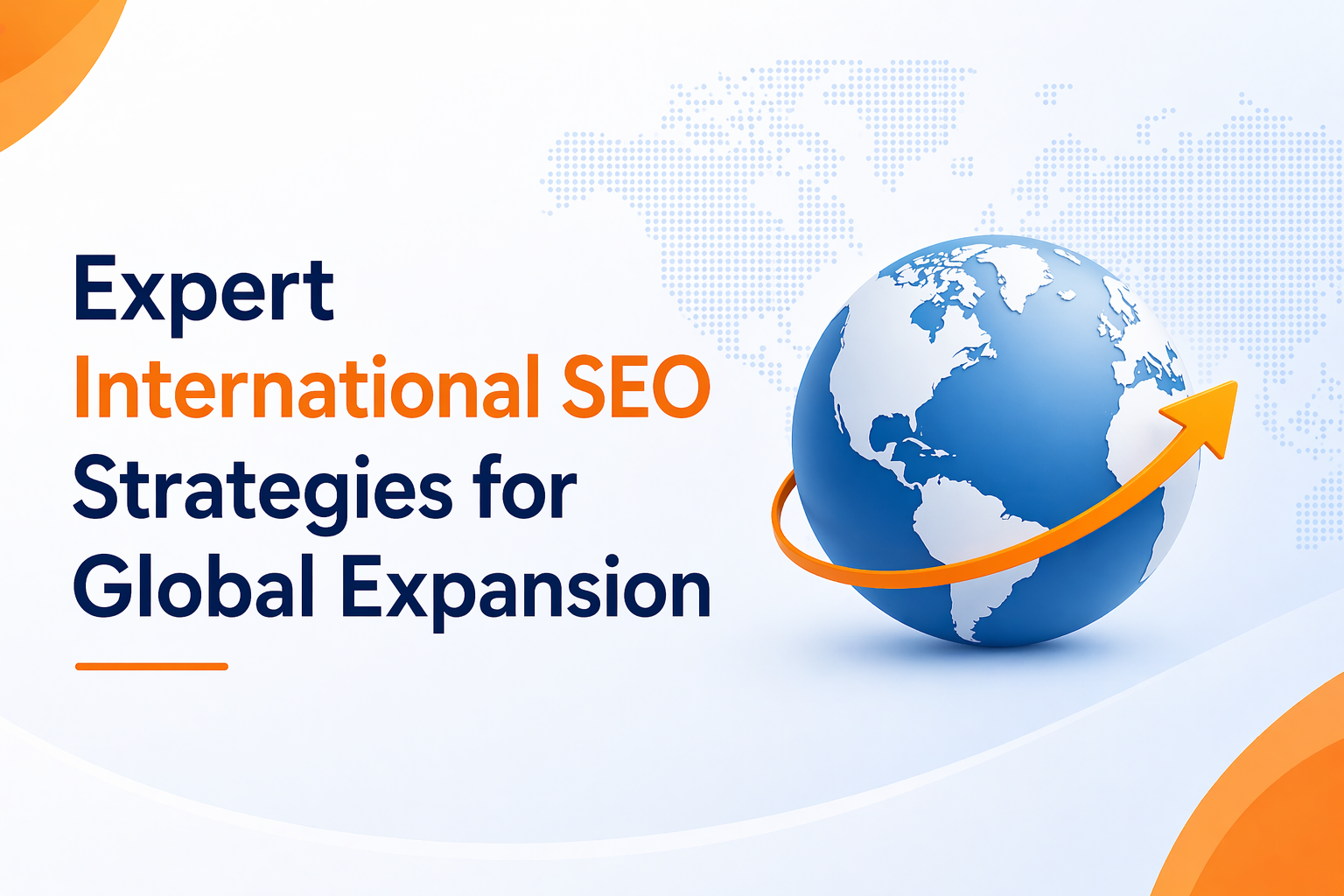
Expert International SEO Strategies for Global Expansion
Expanding a business into international markets is one of the most significant growth moves a company can make, and organic search is one of the most cost-efficient channels for making that expansion work at scale. But international SEO is not simply a translation exercise. It is a complete rethinking of how a site is structured, how content is produced, how technical signals are configured, and how authority is built in markets with different search behaviors, different dominant search engines, and different competitive dynamics.
Expert international SEO strategies for global expansion account for all of these dimensions, building a presence that earns trust and visibility in each target market on its own terms. Companies that treat international SEO as an afterthought to their global expansion plan consistently underperform against competitors who make it a foundational part of their market entry strategy.
Expert International SEO Tips
The difference between an international SEO effort that produces results and one that wastes budget comes down to how well the fundamentals are understood and executed before scaling begins. These tips reflect what actually works across markets.
Start with market research before touching the site
Every target market has its own search behavior, dominant keywords, and competitive environment. The terms your audience uses in the United States may have no direct equivalent in another language or may carry a different intent entirely. Conduct keyword research natively in each target market using local tools and local language inputs, not just translations of your existing keyword list.
Choose the right URL structure for your international architecture
There are three main options: country code top-level domains (ccTLDs) such as .de or .fr, subdirectories such as example.com/de/, and subdomains such as de.example.com. ccTLDs send the strongest geographic signal to search engines but involve the most technical overhead and require building authority separately for each domain. Subdirectories are generally the most practical choice for businesses expanding into multiple markets simultaneously, as they consolidate authority under one root domain while still sending clear geographic signals.
Implement hreflang tags correctly
Hreflang tags tell Google which version of a page to serve to users in specific countries and languages. Incorrect hreflang implementation is one of the most common and damaging technical errors in international SEO. Every page that has a language or regional variant needs a correctly formatted hreflang annotation pointing to every other variant, including a self-referencing tag.
Do not rely solely on machine translation for content
Translated content that reads unnaturally will not rank well and will not convert visitors into customers. Content for each target market should be reviewed and refined by native speakers who understand the cultural context and the natural language patterns of local searchers.
Expert International SEO Checklists
A structured checklist approach prevents the kind of oversights that are easy to make when managing SEO across multiple markets.
Technical checklist:
- URL structure decided and implemented consistently across all market versions
- Hreflang tags implemented on every page with international variants, including self-referencing annotations
- XML sitemaps include all language and regional variants
- Canonical tags configured correctly to prevent cross-market duplicate content
- Page speed optimized for each target region, accounting for server location and CDN configuration
- Structured data implemented in the language of each market version
- Google Search Console properties set up separately for each country target or subdirectory
Content checklist:
- Keyword research conducted natively in each target language, not translated from source market research
- Content written or reviewed by native speakers for each market
- Local currency, units of measurement, date formats, and cultural references used correctly throughout
- Meta titles and descriptions written in the local language and optimized for local search intent
- Internal linking structure connects market versions appropriately without cross-language confusion
Authority and local signals checklist:
- Local backlinks acquired from relevant sites in each target market
- Google Business Profile created and optimized for each physical location
- Local citations built in market-specific directories
- Social proof and reviews collected in the local language for each market

International AI and SEO Expert
Artificial intelligence is reshaping how international SEO is planned and executed, and understanding where AI adds value versus where human expertise remains irreplaceable is important for businesses investing in global search.
Where AI delivers efficiency gains in international SEO:
Content localization at scale. AI tools can produce draft translations and localizations significantly faster than manual processes, which is particularly valuable when a site has hundreds or thousands of pages that need market-specific versions. The drafts still need native speaker review, but the time savings in the initial production phase are substantial.
Keyword clustering across languages. AI-assisted tools can process large multilingual keyword datasets and organize them by intent and topic cluster faster than manual analysis, giving SEO teams a structured starting point for content planning in each market.
Technical issue detection. AI-powered crawl tools can surface hreflang errors, duplicate content across market versions, and crawl coverage gaps across large international site architectures more efficiently than manual audits.
Where human expertise remains non-negotiable:
Cultural nuance in content cannot be automated. AI tools do not understand the cultural context, social sensitivities, or idiomatic preferences of specific markets. Content that is technically accurate but culturally tone-deaf will underperform in local search and damage brand perception.
Strategic market prioritization requires human judgment. Deciding which markets to enter first, which practice areas to target initially, and how to sequence international SEO investment based on competitive opportunity and business goals is a strategic exercise that AI cannot perform accurately without experienced human direction.
Expert International SEO Techniques
Beyond the foundational elements, these advanced techniques separate effective international SEO from surface-level implementation.
Build market-specific link profiles
A backlink from a high-authority German publication does far more for your German search rankings than a backlink from a US publication. International link building means developing relationships and earning coverage from relevant, authoritative sites in each target market. This takes time and local knowledge, but it is one of the most durable competitive advantages in international SEO.
Optimize for market-specific search engines where relevant
Google dominates search in most Western markets, but Baidu holds dominant share in China, Yandex is significant in Russia, and Naver is important in South Korea. Expanding into these markets means understanding the specific ranking factors and technical requirements of each platform, which differ meaningfully from Google’s guidelines.
Use geo-targeting settings in Google Search Console
For sites using subdirectories instead of ccTLDs, geo-targeting settings in Search Console tell Google which country each section of the site is intended for. This reinforces the geographic signal and improves the accuracy with which Google serves the correct version to users in each target market.
Monitor international rankings and traffic separately
International SEO performance should be tracked at the market level, not rolled up into a single global report. Each market needs its own ranking tracking, traffic analysis, and conversion measurement so that performance issues in specific markets are identified and addressed quickly.
Localize conversion elements as carefully as content
Call-to-action text, form fields, trust signals, payment methods, and customer support options all need to reflect local expectations. A page that ranks well in a target market but presents a checkout or contact experience that feels foreign to local users will underperform on conversion regardless of its traffic volume.
Crescita Solutions: Best International SEO Expert
At Crescita Solutions, we work with businesses that are serious about building organic search presence in international markets and understand that it takes specialized expertise to do it correctly. Our team brings direct experience across multilingual site architecture, hreflang implementation, market-specific content strategy, and international link building, combining technical precision with the cultural and strategic understanding that global SEO demands.
We build international SEO strategies that are structured around your specific expansion markets, your business objectives, and the competitive realities of each target region. For companies ready to make organic search a core part of their global growth strategy, Crescita Solutions delivers the expertise, the process, and the accountability to make international expansion through SEO produce real and lasting results.